Pests don’t call ahead. They sneak through foundation cracks, hitch rides on grocery bags, and set up shop before homeowners notice the first droppings or damage. Standard pest control isn’t about waiting for an infestation, it’s about building a defensive perimeter that keeps common invaders out year-round. Whether dealing with ants trailing through the kitchen, spiders claiming corners, or rodents testing attic access, a consistent pest management strategy protects both property value and peace of mind. This guide walks through what standard pest control actually covers, how often treatments should happen, and when to call in professionals versus tackling the problem solo.
Table of Contents
ToggleKey Takeaways
- Standard pest control builds a preventative chemical barrier around your home’s perimeter to stop common pests like ants, spiders, and cockroaches before they establish infestations.
- Quarterly treatments (every 90 days) are recommended for most temperate regions, though warmer climates may benefit from monthly service to match insecticide degradation rates.
- Professional pest control is worth the investment for multi-pest problems, hard-to-reach areas, or persistent issues, while DIY options work for light, isolated pest activity with proper product selection and safety precautions.
- A typical standard pest control visit lasts 30-60 minutes and includes exterior perimeter spraying, granular applications, crack-and-crevice treatment, and interior baseboards if requested.
- Budget $400-$700 annually for quarterly professional service ($100-$175 per visit), with costs varying by region, home size, and local pest pressure, and don’t forget to trim vegetation and clear gutters before treatment.
- Preparation like mowing the lawn, clearing access to the foundation, and vacuuming interior baseboards significantly improves treatment effectiveness and reduces the need for costly re-service calls.
What Is Standard Pest Control and Why Does It Matter?
Standard pest control refers to routine preventative treatments targeting the most common household pests, those that invade homes in nearly every climate zone. This isn’t specialized work like termite fumigation or bed bug heat treatment. It’s the quarterly or monthly service that creates a chemical barrier around a home’s perimeter, treats entry points, and monitors for early signs of activity.
The “standard” label covers insects and arachnids: ants, spiders, cockroaches, silverfish, earwigs, and crickets. Some plans include rodent monitoring with bait stations, though full rodent control often costs extra. Treatments typically use a combination of liquid insecticides sprayed along baseboards and foundation lines, granular baits for crawling insects, and dust applications in wall voids or attic spaces.
Why it matters comes down to prevention versus reaction. An untreated home in most U.S. regions will see pest activity, it’s not a question of if but when. Carpenter ants damage structural wood. Cockroaches spread allergens and bacteria. Rodents chew through wiring, creating fire hazards. Regular treatments stop populations before they establish colonies or nests, which is exponentially cheaper and less disruptive than remediation after an infestation takes hold.
Most standard plans don’t require a contract, but quarterly agreements usually cost less per visit than one-off calls. Expect treatments to focus on the home’s exterior foundation perimeter (a 3-foot band around the house), garage interiors, crawl spaces, and occasionally attics if access allows.
Common Pests Covered by Standard Pest Control Services
Not every creepy-crawly falls under a standard plan. Here’s what typically gets covered, and what doesn’t.
Included pests:
- Ants (pavement ants, odorous house ants, Argentine ants), though carpenter ants and fire ants sometimes require add-on treatments
- Spiders (common house spiders, wolf spiders, cellar spiders), but not brown recluse or black widow eradication, which needs targeted work
- Cockroaches (German, American, Oriental varieties)
- Silverfish and firebrats
- Earwigs, crickets, and sowbugs (pillbugs)
- Centipedes and millipedes
- Boxelder bugs, stink bugs, and cluster flies during seasonal invasions
Many companies include rodent monitoring with exterior bait stations, but active infestations, like mice nesting in walls, often trigger extra charges. If a tech finds droppings or gnaw marks, they’ll set snap traps or recommend exclusion work to seal entry points.
Not covered in standard plans:
- Termites (requires separate contracts with annual inspections and different chemistry)
- Bed bugs (needs heat treatment or fumigation)
- Fleas and ticks (some companies bundle this, but many charge per application)
- Wildlife (squirrels, raccoons, bats, requires licensed trappers)
- Stored product pests like pantry moths or flour beetles (usually a one-time treatment)
Before signing, ask for the company’s pest list in writing. Regional differences matter, scorpion control is standard in Arizona, but you’ll pay extra for it in Georgia.
How Often Should You Schedule Standard Pest Control Treatments?
Treatment frequency depends on climate, home construction, and pest pressure in the area. Most professionals recommend quarterly service (every 90 days) as the baseline for temperate regions. This schedule aligns with insecticide degradation rates, most perimeter sprays break down under UV exposure and rain within 60-90 days.
In warmer climates or high-activity zones (near wooded lots, wetlands, or agricultural areas), monthly or bi-monthly treatments make more sense. Florida, Texas, and coastal areas with year-round pest seasons see better results with tighter intervals. Colder regions where insects go dormant can sometimes stretch to semi-annual treatments, one in early spring before activity ramps up, another in late summer before fall invaders seek indoor shelter.
Seasonal pest behavior also dictates timing:
- Spring (March-May): Ants, termite swarmers, and spiders emerge
- Summer (June-August): Peak activity for most crawling insects and rodents seeking water
- Fall (September-November): Stink bugs, boxelder bugs, and mice look for overwintering sites
- Winter (December-February): Indoor activity from pests already inside: exterior treatments pause in freezing zones
For new construction or homes with no prior pest history, starting with quarterly service and adjusting based on results is the safest bet. If a homeowner sees breakthrough activity between visits, the interval’s too long. Companies typically offer free re-treatments within the service window if pests return, so don’t wait to call.
DIY vs. Professional Pest Control: Which Is Right for Your Home?
The decision between DIY and professional service hinges on three factors: infestation severity, comfort with chemicals, and time.
DIY works when:
- The problem’s limited to occasional ants or spiders in predictable spots (entry doors, windows)
- The homeowner can identify the pest accurately, misidentification wastes money on the wrong product
- Access to all treatment zones is easy (no crawl spaces requiring a belly-crawl or attics with limited headroom)
- The homeowner’s willing to invest in proper PPE (nitrile gloves, safety goggles, respirator mask for concentrated products) and read product labels thoroughly, application rates and re-entry times aren’t optional
Hardware store options like Ortho Home Defense (bifenthrin-based perimeter spray) or Terro liquid ant baits (borax) handle light pressure. For outdoor perimeter work, a 1-gallon pump sprayer applies liquid insecticide along foundation lines. Expect to reapply every 30-60 days depending on rainfall.
Professional service makes sense for:
- Multi-pest issues or unidentified invaders, techs carry diagnostic tools and product libraries
- Hard-to-reach areas like crawl spaces, wall voids, or attics where dust insecticides (like CimeXa or Delta Dust) need application guns
- Persistent problems even though DIY efforts, sometimes the issue’s a structural gap or moisture problem, not just surface pests
- Homes where kids, pets, or chemically sensitive residents make product selection tricky, pros use low-toxicity options like botanical sprays or baits instead of broadcast applications
Professionals also carry commercial-grade products not available retail (Demand CS, Suspend SC) with longer residuals. They’re trained in general pest control strategies that combine treatments with exclusion advice, caulking foundation cracks, trimming vegetation, fixing moisture issues.
Cost comparison: DIY perimeter treatment runs $40-$80 for products covering 3-4 applications. Quarterly professional service averages $100-$150 per visit ($400-$600 annually). If a homeowner values time over savings and wants guaranteed re-service, professional plans win. For budget-conscious DIYers with straightforward pest issues, retail products and some elbow grease work fine.
What to Expect During a Standard Pest Control Visit
A typical service call lasts 30-60 minutes for an average-sized home (1,500-2,500 sq ft). Here’s the rundown.
The tech starts with an exterior inspection, walking the perimeter to check for active pest trails, entry points, and conducive conditions (wood-to-soil contact, standing water, overgrown vegetation). They’ll note any damage or high-risk areas, rotted sill plates, gaps around utility penetrations, or mulch piled against siding.
Exterior treatment involves:
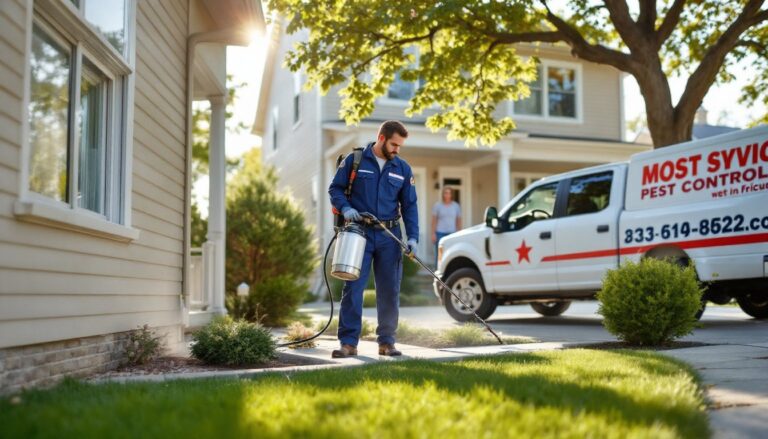
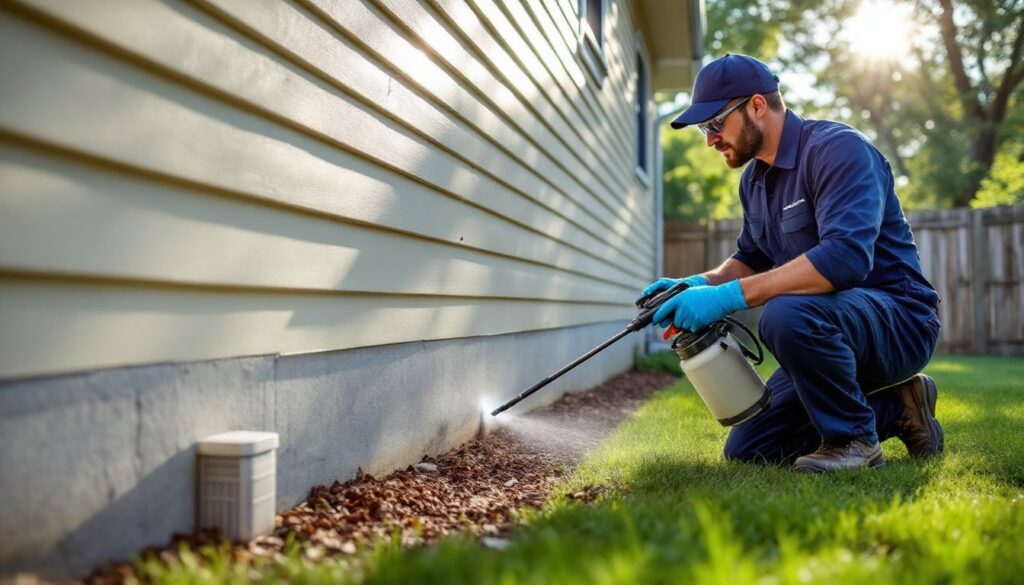
- Perimeter spray: Applying liquid insecticide in a 3-foot band along the foundation, up to window sills. The tech uses a backpack sprayer or hose-end applicator, soaking the surface until it’s damp but not dripping.
- Granular application: Spreading insecticide granules in landscape beds, under decks, or around the foundation if soil conditions allow. Granules work well in high-moisture areas where liquids wash away.
- Crack and crevice treatment: Injecting insecticidal dust or foam into gaps around pipes, vents, or weep holes in brick veneer.
- Rodent station service: Checking and refilling exterior bait stations if included in the plan.
Interior work (if requested or included) covers:
- Garage perimeter: Baseboards, door thresholds, and garage door tracks
- Crawl space or basement: Dusting or spraying joists, sill plates, and around plumbing penetrations
- Attic: Dusting insulation or treating around vents if accessible
Most standard plans keep interior treatments minimal unless the homeowner reports active indoor pests. Heavy interior spraying’s less common now, modern Integrated Pest Management (IPM) emphasizes exterior barriers and targeted baits over broadcast indoor applications.
After treatment, expect a re-entry time of 2-4 hours for exterior-only work, longer if interior spaces were treated. The tech should leave a service ticket noting products used, areas treated, and any recommendations (like trimming shrubs or repairing screens). Many services now use apps with digital tickets and photos of problem spots.
Essential Prep Steps Before Your Pest Control Appointment
Proper prep makes treatments more effective and keeps re-service calls down.
Exterior tasks (24 hours before):
- Mow the lawn and trim vegetation away from the foundation, overgrown grass or shrubs block spray coverage and create pest harborage
- Move outdoor furniture, grills, and toys at least 3 feet from the house so the tech can access the entire perimeter
- Clear gutters and downspouts, standing water attracts mosquitoes and provides drinking sources for ants
- Pick up pet food and water bowls from outdoor areas: remove or cover fish ponds if the tech will treat nearby
Interior prep (if indoor treatment’s planned):
- Vacuum thoroughly, especially along baseboards and under furniture, this removes existing eggs and debris that interfere with product adhesion
- Clear floor clutter from closets, pantries, and under sinks so the tech can access baseboards
- Empty kitchen cabinets if cockroach or ant activity’s reported inside, techs need to treat cabinet interiors and hinges
- Remove pets and cover aquariums with damp towels: turn off aquarium pumps during treatment and for 2 hours after
- Store or cover food items on counters, and remove small appliances like toasters from treatment zones
If you’re unsure what’s needed, ask when booking. Companies appreciate homeowners who clear access, it speeds up service and improves results. For more tips on maintaining your home year-round, resources like Today’s Homeowner offer seasonal checklists that align pest prevention with routine upkeep.
Cost of Standard Pest Control: What Homeowners Should Budget
Pricing varies by region, home size, pest pressure, and service frequency, but here’s the national picture as of 2026.
One-time service: $150-$300 for an initial visit with interior and exterior treatment. This establishes the baseline and addresses active infestations.
Quarterly plans: $100-$175 per visit, or $400-$700 annually. Larger homes (over 3,000 sq ft) or properties on acreage often hit the higher end. Some companies discount if paying annually upfront versus per visit.
Monthly service: Common in high-activity regions. Runs $50-$100 per visit ($600-$1,200 annually). Monthly plans usually include unlimited re-treatments between scheduled visits.
Add-on costs to watch for:
- Rodent control: +$50-$150 per visit if trapping or exclusion work’s needed beyond basic monitoring
- Attic or crawl space treatment: +$75-$200 depending on access difficulty
- Termite inspection/treatment: Separate contract, usually $500-$1,500 annually for monitoring or $1,500-$3,500 for active treatment
- Initial inspection fee: Some companies charge $75-$150 for the first visit, then credit it toward service if you sign up
Factors that bump costs:
- Heavy vegetation or wooded lots requiring extra product
- Multi-story homes or complex rooflines
- Severe infestations needing multiple treatments or specialty products
- Travel fees for rural properties (20+ miles from a service center)
Cost-saving tips: Bundle pest control with lawn care or termite plans for package discounts. Ask about annual payment discounts, many companies offer 5-10% off. Some plans include a free re-treatment guarantee if pests return between scheduled visits: confirm this before signing.
For those comparing national providers, reviewing Orkin’s pricing structure offers insight into industry standards. Regional outfits sometimes undercut big names by 10-20%, but verify they’re licensed and insured. State requirements vary, but most require pest control operators to hold certifications and carry liability coverage.
Budget-conscious homeowners can start with quarterly service and upgrade to monthly if breakthrough activity’s frequent. Conversely, those in low-pest areas or well-sealed newer homes might find bi-annual treatments sufficient after the first year establishes control. Track results and adjust, pest control isn’t one-size-fits-all.