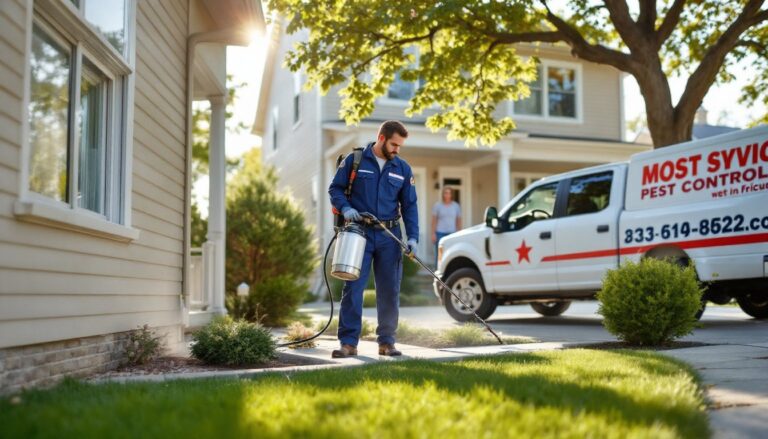
Pests don’t wait for an invitation, they find gaps, cracks, and moisture, then move in like they’re signing a lease. By 2026, homeowners have more tools than ever to stay ahead of infestations, from wireless sensors that detect rodent activity to low-toxicity baits engineered for precision targeting. But advanced pest control isn’t just about gadgets. It’s a combination of understanding pest behavior, using integrated strategies, and building physical barriers that stop problems before they start. This guide breaks down the professional-grade tactics you can carry out yourself, without turning your home into a chemical lab or calling an exterminator every month.
Table of Contents
ToggleKey Takeaways
- Advanced pest control prioritizes prevention and exclusion over chemical elimination, using Integrated Pest Management (IPM) to seal entry points, remove attractants, and monitor before treating.
- Understanding pest biology—such as how ants follow scent trails and rodents need only ½-inch gaps to enter—allows you to disrupt their behavior with targeted, precision methods rather than broad-spectrum spraying.
- Mechanical barriers like door sweeps, hardware cloth, and caulked cracks provide long-term protection for $20–50 per entry point and eliminate the need for repeated exterminator visits.
- Smart technology such as Wi-Fi-enabled rodent traps, humidity monitors, and thermal imaging cameras help you detect and prevent infestations before they become established problems.
- Eco-friendly alternatives like diatomaceous earth, botanical insecticides, and beneficial nematodes work best as part of a multi-tier system, not as standalone solutions to active infestations.
- A well-maintained perimeter—including sealed foundations, cleared vegetation, proper drainage, and vapor barriers in crawl spaces—is your strongest defense against pests entering your home.
Understanding Modern Pest Control Methods
Traditional pest control relied on reactive spraying, see a bug, kill it, repeat next month. Modern approaches flip that script. The goal isn’t just elimination: it’s prevention, monitoring, and minimal environmental impact.
Professionals now use Integrated Pest Management (IPM), a multi-tier system that prioritizes non-chemical solutions first. This means sealing entry points, removing food and water sources, and using traps or physical barriers before reaching for any pesticide. For homeowners, this shift matters because it’s safer around kids and pets, reduces chemical exposure, and actually works better long-term.
The key is understanding pest biology. Ants follow scent trails, so disrupting those trails with vinegar or soapy water can be more effective than spraying insecticide that only kills visible workers. Rodents need ½-inch gaps to enter: sealing those with copper mesh or steel wool stops them cold. Termites need moisture and wood contact with soil, raise your wood siding 6 inches above grade and fix leaky gutters, and you’ve eliminated their ideal conditions.
Integrated Pest Management (IPM) for Homeowners
IPM isn’t a single product, it’s a decision tree. Start with inspection: walk your property’s perimeter, basement, attic, and crawl space with a flashlight and notepad. Look for droppings, gnaw marks, shed skins, and entry points. Document everything.
Next, remove attractants. Store firewood 20 feet from the house and elevate it on racks. Trim tree branches within 6 feet of the roof to cut off highways for ants, squirrels, and roof rats. Fix any standing water in gutters, AC drip pans, or low spots in your yard, mosquitoes breed in as little as a bottle cap of water.
Third tier: mechanical controls. Install door sweeps on all exterior doors (look for models with nylon brush or rubber seals rated for ⅜-inch gaps). Use ¼-inch hardware cloth to cover foundation vents, dryer vents, and attic louvers. These barriers cost $20–50 per entry point but last years.
Chemical controls come last, and only when targeted. If you’ve sealed, cleaned, and trapped but still have issues, use pesticides designed for the specific pest. Broad-spectrum sprays kill beneficial insects and create resistance. Products like boric acid dust for cockroaches or fipronil gel baits for ants are far more effective because they target biology, not just contact. Many households find that combining these approaches with general pest control strategies provides a more comprehensive defense.
Smart Technology in Pest Detection and Prevention
Wireless pest monitors have dropped in price and jumped in capability. Wi-Fi-enabled rodent traps send alerts to your phone when triggered, so you’re not checking traps daily. Some models include cameras, helpful if you’re dealing with larger pests like raccoons or possums and need to confirm species before setting control measures.
Ultrasonic pest repellers get mixed reviews in professional circles. The science is shaky: rodents can habituate to the sound, and effectiveness drops significantly in multi-room layouts where walls block signals. Save your money unless you’re targeting a very specific, open-area problem.
More useful: smart home integration for environmental monitoring. Wireless hygrometers track humidity in basements and crawl spaces. Keep relative humidity below 50% to discourage silverfish, centipedes, and mold-loving pests. Pair that with a smart dehumidifier, and you’ve automated one of the biggest attractants.
Motion-activated lighting around entry points deters nocturnal pests like raccoons and opossums. These animals prefer dark, undisturbed zones. Adding a $15 motion sensor to existing porch or garage lights is a simple upgrade that pays off.
For serious infestations, consider thermal imaging cameras (available as smartphone attachments for $200–400). These detect temperature variations in walls that indicate rodent nests, termite activity, or moisture intrusion. Professionals use them, but the tech has trickled down to the consumer level. When tracking down a hidden nest or identifying where pests are entering, thermal imaging beats guesswork. Homeowners researching pricing for specific pest issues can explore options through resources like Angi, which provides detailed cost breakdowns and contractor reviews for pest control services.
Advanced Treatment Techniques You Can Implement
Once you’ve identified the pest and failed to dislodge them with exclusion alone, it’s time for targeted treatment. The pros use precision tools and formulations unavailable to consumers, but there’s a middle ground that’s both effective and safe.
Targeted Baiting Systems
Rodent bait stations are tamper-resistant boxes that hold poison blocks or pellets. Use only exterior-rated stations outside (look for models meeting EPA tamper-resistance standards). Place them along walls, near burrow entrances, and under decks, rodents travel edges, not open ground. Inside, use snap traps or electric traps baited with peanut butter or nesting material like cotton balls. Rodents collect nesting material in spring: exploit that instinct.
For ants, liquid bait stations work best. Worker ants carry the bait back to the colony, killing the queen. It takes 7–10 days to see full effect, don’t panic and spray insecticide in the meantime, or you’ll kill the workers before they can deliver the poison. Popular formulations use borax or fipronil: both disrupt the nervous system but are slow-acting enough to spread through the colony.
Termite bait stations are in-ground monitors you install every 10 feet around your home’s perimeter. They contain wood that’s more attractive than your house framing, plus a slow-acting toxin. Check them every 3 months. If you find activity, the bait does the work, termites share food, spreading the toxin to the colony. This is a pro-level tactic you can DIY, though some jurisdictions require licensed applicators for certain termiticides. Many homeowners dealing with roach problems also turn to targeted baiting methods to address infestations effectively.
Eco-Friendly Chemical Alternatives
Diatomaceous earth (DE) is fossilized algae ground into a fine powder. It’s mechanical, not chemical, microscopic sharp edges cut through insect exoskeletons, causing dehydration. Apply food-grade DE (not pool-grade) in a thin layer along baseboards, under appliances, and in wall voids. Wear a dust mask: DE is non-toxic but irritates lungs. Reapply after it gets wet.
Botanical insecticides like pyrethrin (derived from chrysanthemums) break down quickly in sunlight and are less toxic to mammals. They’re contact killers, so you need to hit the pest directly, good for treating a wasp nest at dusk when insects are sluggish. Follow up with sealing the entry to prevent recolonization.
Essential oil sprays (peppermint, clove, citrus) have some repellent properties but are not EPA-registered pesticides. They work as part of an IPM approach, disrupting trails, masking pheromones, but won’t eliminate an established infestation. Think of them as a deterrent, not a cure. For households with pets, pet-safe treatment options ensure that both pest elimination and animal safety remain priorities.
Beneficial nematodes are microscopic worms you spray on lawns to control grubs, fleas, and other soil-dwelling pests. They’re alive, so apply during early morning or dusk when soil is moist and UV is low. Results take 2–3 weeks, and effectiveness varies by soil temperature and pest species. This is advanced biocontrol, most effective in integrated systems, not as a standalone fix.
Creating Long-Term Pest Barriers Around Your Property
The best pest control happens before pests get inside. A well-maintained perimeter is your first and strongest line of defense.
Start with the foundation. Walk your home’s perimeter and fill every crack wider than ⅛ inch with polyurethane or silicone caulk. For larger gaps (up to 1 inch), use expanding foam, then trim and paint it. Pests exploit even hairline cracks: mice can flatten their skulls to fit through a dime-sized hole.
Install a gravel or rock border 12–18 inches wide around your foundation. This creates a dry, inhospitable zone that deters termites, ants, and ground-nesting wasps. Avoid mulch directly against the house, organic mulch retains moisture and attracts pests. If you must use mulch for aesthetics, keep it 6 inches from siding and refresh it annually to prevent decomposition that harbors insects.
Check your roof and attic access points. Soffit vents, gable vents, and ridge vents should all have intact screens (¼-inch mesh minimum). Squirrels, bats, and birds enter through surprisingly small gaps. If you find entry points, wait until evening (when animals leave to forage), then seal with hardware cloth secured with screws, not staples. Staples pull out: screws don’t.
Drainage matters. Downspouts should discharge water at least 6 feet from the foundation. Use splash blocks or extenders if needed. Standing water within 10 feet of your home creates mosquito habitat and attracts rodents looking for water sources. Slope soil away from the foundation at 1 inch per foot for the first 6 feet, improper grading is one of the top contributors to both pest and moisture problems.
For crawl spaces, install a 6-mil polyethylene vapor barrier across the entire dirt floor, overlapping seams by 12 inches and taping them. This reduces humidity (discouraging pests and wood rot) and makes it easier to spot new pest activity. Add a battery-powered work light or motion-activated LED so you’re more likely to inspect regularly, out of sight shouldn’t mean out of mind.
Finally, manage vegetation. Ivy, shrubs, and ground covers that touch your home create pest highways and trap moisture against siding. Trim everything back 12 inches minimum. Tree branches over the roof? Cut them back 6 feet. This also reduces fire risk in wildfire-prone areas, a bonus. Homeowners comparing service providers often consult platforms like HomeAdvisor to evaluate contractor credentials and project estimates before committing to larger barrier installations.
Consider a perimeter treatment with a residual insecticide rated for outdoor use. Products containing bifenthrin or lambda-cyhalothrin create a treated zone 3–6 feet wide around your foundation. Reapply every 90 days or after heavy rain. This isn’t a replacement for exclusion work, but it adds a chemical barrier for persistent invaders like ants, spiders, and millipedes. Always follow label instructions and avoid spraying near storm drains, these products are toxic to aquatic life. Detailed maintenance and seasonal advice can also be found through resources like The Spruce, which covers everything from garden upkeep to home sealing techniques. For ongoing support, many homeowners turn to expert pest services to maintain the integrity of barriers over time.