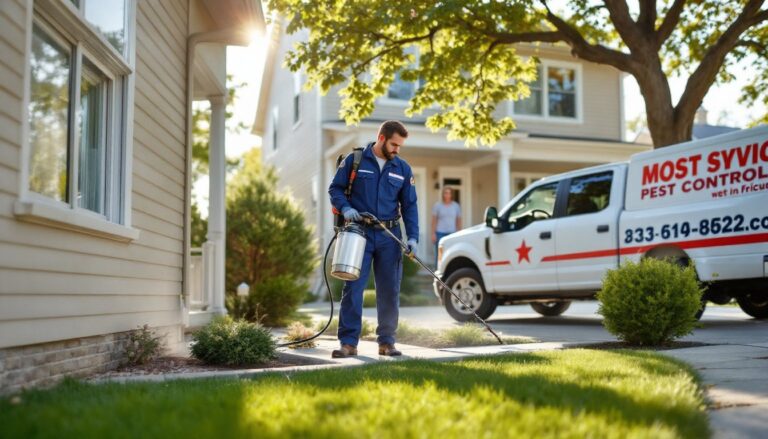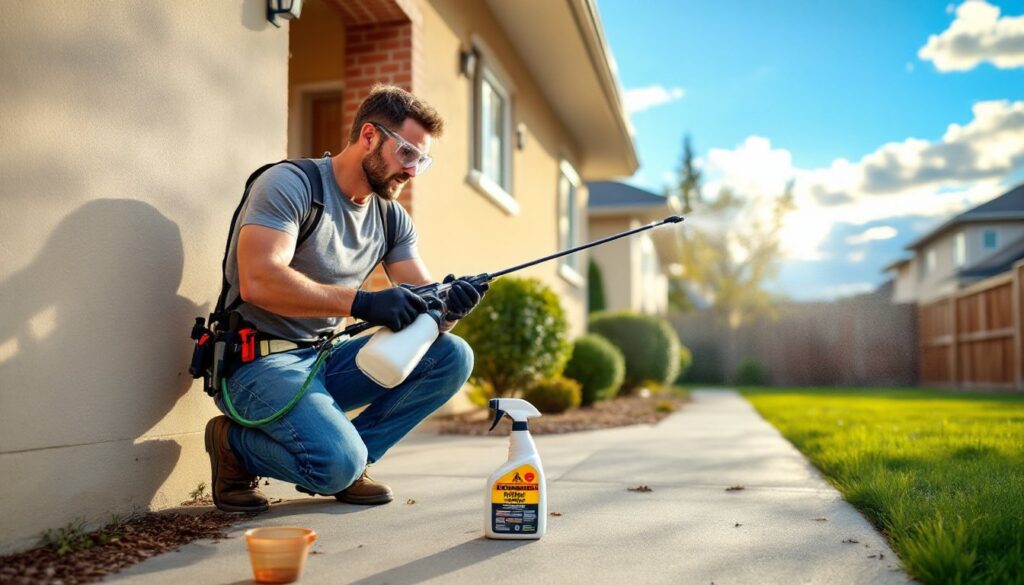
Spray pest control remains one of the most effective and accessible tools for homeowners dealing with everything from ants marching across the kitchen counter to spiders setting up camp in the basement. Unlike traps or baits that work slowly, spray insecticides deliver fast knockdown and residual protection when applied correctly. But walk into any hardware store and you’ll face dozens of options, perimeter sprays, indoor aerosols, concentrate formulas, and “natural” alternatives, all promising results.
This guide cuts through the marketing noise. It covers what spray pest control actually is, which formulas work for specific bugs, how to apply them safely and effectively, and when it’s smarter to call in a licensed pro instead of tackling the problem solo.
Table of Contents
ToggleKey Takeaways
- Spray pest control delivers fast knockdown and residual protection by using liquid insecticides that disrupt pests’ nervous systems on contact or through surface exposure, making it ideal for everything from ants to spiders.
- Different pests require different active ingredients—bifenthrin for ants, cyfluthrin for roaches, pyrethroid-based sprays for spiders, and permethrin or IGR-based formulas for fleas and ticks.
- Proper spray pest control application requires precise label reading, appropriate PPE (gloves, goggles, respirator), correct mixing ratios, and systematic coverage from baseboards to perimeter entry points.
- Ready-to-use sprays suit occasional light infestations, while concentrates offer better long-term value for recurring problems, with residual protection lasting 30 to 90+ days depending on formulation.
- DIY spray treatments work well for prevention and localized infestations, but professional services are necessary for termites, bed bugs, carpenter ants, widespread infestations, or situations requiring structural repairs.
- Always follow EPA label instructions exactly, ventilate treated areas, keep children and pets away until dry, and dispose of leftover spray responsibly through hazardous waste programs to ensure safety and environmental protection.
What Is Spray Pest Control and How Does It Work?
Spray pest control uses liquid insecticide formulations to kill or repel insects and arachnids on contact, through ingestion, or via residual surface exposure. Most consumer-grade sprays contain active ingredients like pyrethroids (synthetic compounds modeled after chrysanthemum extracts), neonicotinoids, or organophosphates, though natural options use ingredients like essential oils or diatomaceous earth suspensions.
When a homeowner sprays a baseboard, door frame, or foundation perimeter, the chemical forms a thin barrier. Pests crossing that barrier pick up the active ingredient on their bodies. Depending on the formula, the insecticide disrupts the pest’s nervous system, causing paralysis and death, sometimes within minutes, sometimes over several hours.
Residual sprays continue working for weeks or even months after application, killing new pests that contact treated surfaces. This makes them ideal for preventative perimeter treatments. Contact sprays work immediately but break down faster, suited for spot treatments of visible infestations.
Most products come as ready-to-use (RTU) trigger sprays, hose-end concentrates, or pump sprayers requiring dilution. Concentrates offer better cost-per-gallon value but require precise mixing, typically 0.5 to 2 ounces per gallon of water, depending on target pest and product label.
Types of Pest Control Sprays for Different Infestations
Choosing the wrong spray wastes money and time. Different pests require different active ingredients and formulations.
Ant sprays often contain bifenthrin or fipronil, which disrupt colony communication and kill workers before they return to the nest. Look for non-repellent formulas, repellent sprays just scatter the colony.
Roach sprays need fast knockdown plus residual protection. Cyfluthrin and lambda-cyhalothrin work well. Spray along baseboards, under sinks, and behind appliances where roaches travel at night.
Spider control benefits from pyrethroid-based sprays applied to web locations, eaves, and window frames. Many homeowners trust products that control spiders and related pests through barrier treatments rather than direct contact.
Flea and tick sprays require different chemistry. Permethrin works on ticks: for fleas, look for formulas with insect growth regulators (IGRs) like methoprene, which prevent larvae from maturing.
Perimeter sprays (broad-spectrum) target multiple pests, ants, spiders, roaches, earwigs, and are applied along the foundation, doorways, and window sills. These typically offer 30 to 90 days of residual control.
Indoor vs. Outdoor Spray Applications
Indoor sprays must be low-odor, low-toxicity, and fast-drying to protect occupants and pets. Most are water-based RTU formulas designed for cracks, crevices, and spot treatments. Never use outdoor concentrates indoors, they’re formulated for dilution and weathering, not enclosed spaces.
Outdoor sprays face rain, UV degradation, and temperature swings, so they’re formulated with higher concentrations and weather-resistant carriers. Apply them to:
- Foundation walls (up to 3 feet high and 6 feet out)
- Door and window frames
- Eaves, soffits, and fascia boards
- Mulch beds and landscape edging
Avoid spraying in direct sunlight or before rain. Early morning or late evening application reduces evaporation and improves coverage.
DIY Spray Pest Control: Step-by-Step Application Guide
Proper application makes the difference between effective control and wasted product. Follow these steps for both indoor and outdoor treatments.
Materials List:
- Appropriate insecticide spray (RTU or concentrate)
- Pump sprayer or hose-end sprayer (for concentrates)
- Safety gear: nitrile gloves, safety goggles, long sleeves, respirator mask (if spraying indoors or in confined spaces)
- Measuring cup (for concentrates)
- Drop cloth or plastic sheeting (optional, for furniture protection)
Step-by-Step Process:
-
Read the label. Every word. Note dilution ratios, target pests, application rates (often listed as gallons per 1,000 square feet), and re-entry intervals.
-
Prep the area. Remove toys, pet bowls, and food items. Cover fish tanks. Move furniture away from baseboards if treating indoors.
-
Mix concentrate (if applicable). Measure precisely. For example, if the label calls for 1 ounce per gallon and you’re filling a 2-gallon sprayer, use exactly 2 ounces. Add chemical to water, not water to chemical, to prevent foaming.
-
Test the sprayer. Spray plain water first to confirm even mist and proper pressure. Adjust nozzle for a coarse spray, fine mist drifts and wastes product.
-
Apply to target surfaces. Hold the wand 12 to 18 inches from the surface. Use a sweeping motion, overlapping each pass slightly. For cracks and crevices, use a pin-stream setting if available.
-
Work systematically. Indoors: start at the farthest point and work toward the exit. Outdoors: treat the foundation perimeter first, then doors, windows, and other entry points.
-
Let it dry. Most sprays need 30 minutes to 2 hours to dry fully. Keep kids and pets away during this time.
-
Clean up. Rinse sprayer thoroughly with water. Dispose of leftover mixed solution per label instructions, never pour it down the drain.
For a broader understanding of integrated methods, many homeowners combine spraying with general pest control strategies such as exclusion and sanitation.
Choosing the Right Spray for Your Pest Problem
Not all sprays are created equal. Match the product to the pest and the location.
For light, occasional issues (a few ants, the odd spider), a ready-to-use aerosol or trigger spray works fine. These cost more per ounce but require no mixing and store easily.
For recurring or heavy infestations, invest in a concentrate and a 1- or 2-gallon pump sprayer. You’ll pay $30 to $60 upfront, but the concentrate treats thousands of square feet and lasts multiple seasons if stored properly.
Check the active ingredient percentage. A product with 0.5% bifenthrin is stronger than one with 0.05%. Higher concentrations mean longer residual control but also greater toxicity, handle with care.
Look for labels listing your target pest. If it’s not listed, the product hasn’t been tested or approved for that use. Don’t assume “broad-spectrum” means “kills everything.”
Consider formulation:
- Water-based sprays dry clear, won’t stain, and have low odor. Best for indoor use.
- Oil-based sprays penetrate better and last longer outdoors but may leave residue.
- Microencapsulated formulas release active ingredients slowly over time, extending residual control to 90+ days.
Natural or synthetic? Sprays with essential oils (peppermint, clove, rosemary) repel pests but rarely kill on contact. They’re safer around kids and pets but require more frequent reapplication. Synthetic pyrethroids kill faster and last longer but carry higher toxicity risk if misused.
For pricing context, expect to pay $8 to $15 for a 32-ounce RTU spray, $20 to $40 for a quart of concentrate, and $50 to $100 for professional-grade products. Prices vary by region and retailer.
Safety Tips and Best Practices for Home Pest Spraying
Spray insecticides are EPA-registered, but that doesn’t mean they’re harmless. Proper handling protects people, pets, and the environment.
Always wear PPE. At minimum: nitrile gloves and safety goggles. For indoor spraying or work in tight spaces, add a respirator mask rated for pesticide vapors (P100 or organic vapor cartridge). Long sleeves and pants prevent skin contact.
Ventilate. Open windows and run fans when spraying indoors. Leave the area for the re-entry interval specified on the label, usually 30 minutes to 4 hours.
Keep kids and pets out. Treated areas should be off-limits until surfaces dry completely. For homes with crawling infants or curious pets, consider treating only inaccessible areas like wall voids and attic spaces.
Never mix products. Combining two insecticides doesn’t double effectiveness, it creates unpredictable chemical reactions and voids product warranties.
Store properly. Keep concentrates in original containers, tightly sealed, in a cool, dry location away from food and out of reach of children. Extreme heat or freezing can degrade active ingredients.
Dispose responsibly. Don’t dump leftover spray down drains or onto soil. Check with local waste management for hazardous material disposal days. Empty containers can often be rinsed (triple-rinse method) and recycled where pesticide container programs exist.
Avoid contaminating water sources. Don’t spray near wells, ponds, or streams. Drift and runoff can harm aquatic life.
Follow the label to the letter. It’s not just a suggestion, it’s federal law under FIFRA (Federal Insecticide, Fungicide, and Rodenticide Act). Misuse voids liability protections and can result in fines.
Resources like Today’s Homeowner and The Spruce offer additional safety checklists and seasonal maintenance guides that complement pest control efforts.
When to Call a Professional vs. Handle It Yourself
DIY spray pest control handles most common residential issues, but some situations require licensed professionals.
Go DIY if:
- The infestation is limited to one or two rooms
- You can identify the pest and it’s listed on consumer product labels
- The problem is preventative (seasonal perimeter spraying)
- You’re comfortable with PPE, mixing, and application techniques
Call a pro if:
- You’re dealing with termites, bed bugs, or carpenter ants, these require specialized treatments (fumigation, heat, or targeted baiting) that consumer sprays can’t provide.
- The infestation is widespread or recurring even though your efforts. Professionals have access to restricted-use pesticides and application equipment homeowners can’t buy.
- Structural work is needed. If pests are entering through foundation cracks, rotted sills, or compromised roofing, sealing those entry points may require carpentry, masonry, or roofing repairs, spray alone won’t solve it.
- You’re unsure of the pest species. Misidentification leads to wasted time and money. Pros can ID pests and tailor treatment plans.
- You have health concerns. Pregnant individuals, young children, or anyone with respiratory conditions should avoid direct pesticide exposure.
- Local regulations require it. Some jurisdictions restrict pesticide use to licensed applicators, especially for exterior perimeter treatments in multi-family housing or near water sources.
Cost comparison: A professional one-time service runs $100 to $300 for a typical single-family home, depending on region and pest type. Quarterly contracts average $300 to $600 annually. DIY material costs for the same coverage: $40 to $100 per year. If you’re comfortable with the work and have the time, DIY saves money. If not, pros offer guarantees and often include follow-up visits. When weighing options, homeowners sometimes research service pricing to compare DIY costs against professional contracts.
Bottom line: DIY works for prevention and light control. For serious infestations or pests that damage structures, hire a licensed pest control operator. It’s not about ability, it’s about access to the right tools and chemistry for the job.