Imagine stepping into a living room that feels like a stylish time capsule, where every piece tells a story and every corner invites you to kick back and relax. Mid-century modern interior design isn’t just a trend; it’s a lifestyle that effortlessly combines form and function. With its clean lines, organic shapes, and a dash of nostalgia, this design style transforms ordinary spaces into extraordinary retreats.
Overview of Mid Century Modern Design
Mid-century modern design emerged in the mid-20th century, approximately from the 1940s to the 1960s. Architects and designers focused on simplicity, functionality, and integration with nature during this era. Clean lines and minimal ornamentation characterize this style. Natural materials such as wood, leather, and textiles play a significant role in creating warmth in spaces.
Furniture design reflects a balance of form and function. Iconic pieces include the Eames Lounge Chair, the Noguchi Table, and the Saarinen Tulip Chair. These elements often feature organic shapes that echo the aesthetics found in nature, emphasizing comfort alongside visual appeal.
Color palettes in mid-century modern interiors typically incorporate earthy tones combined with vibrant accents. Shades of green, orange, and mustard yellow create a lively atmosphere, often highlighted by bold textiles. Large windows and open floor plans enhance natural light, connecting indoor spaces with the outdoors.
Incorporating artwork and decor also contributes to the mid-century modern atmosphere. Artwork from the era, like abstract expressionism, enriches the space’s character. Decorative items often include sculptural forms or geometric designs that align with the overall theme.
This design philosophy encourages a relaxed lifestyle, facilitating both social gatherings and personal retreats. Mid-century modern spaces often feel inviting yet sophisticated, attracting those who appreciate its timeless charm. Embracing these principles allows one to create a living room that embodies the essence of mid-century modern design.
Key Characteristics of Mid Century Modern Living Rooms
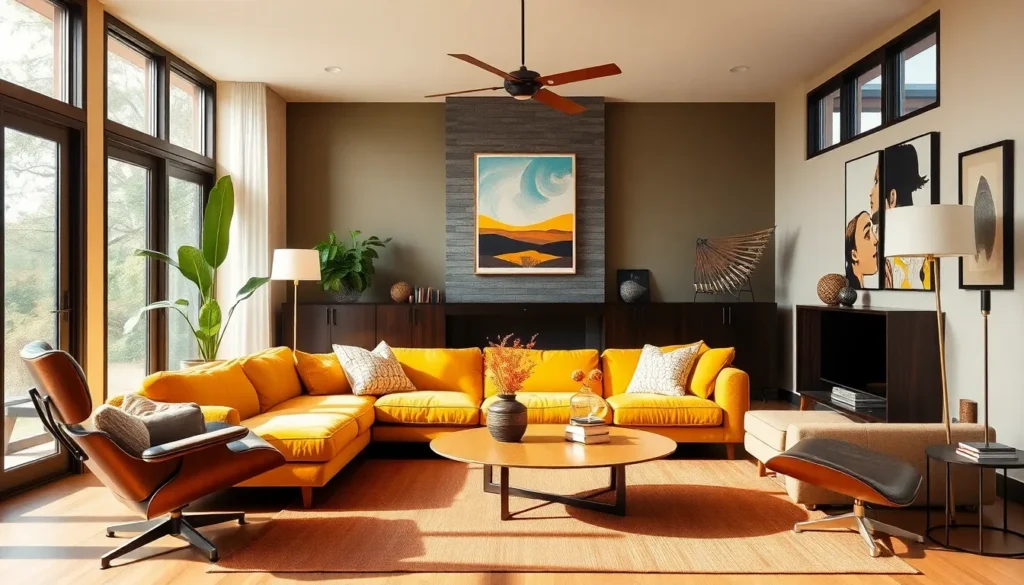
Mid-century modern living rooms feature distinct elements that define their appeal. The integration of color, furniture, and decor creates an inviting atmosphere that many desire in their homes.
Color Palettes
Color palettes in mid-century modern living rooms reflect a balance of earthy tones and vibrant accents. Neutrals such as beige, grey, and white serve as foundational colors, while hues like teal, mustard yellow, and burnt orange add pops of excitement. Designers often utilize combinations of these colors to enhance visual interest. In addition, large windows complement the colors by emphasizing natural light, enhancing the overall aesthetic of the space. This strategic use of color enhances the sensation of openness and connection to nature, fundamental to mid-century modern design.
Furniture Styles
Furniture styles are central to mid-century modern living rooms. Iconic pieces like the Eames Lounge Chair and the Noguchi Coffee Table showcase the aesthetic’s emphasis on clean lines and organic shapes. Upholstered sofas in bold colors or patterned fabrics create focal points in the space. Designers prioritize functionality alongside style, ensuring that each piece serves a purpose while contributing to the overall visual harmony. Wood materials dominate furniture choices, adding warmth and texture. Additionally, furniture arrangements often promote conversation, enhancing the interactive nature of living rooms in this style.
Essential Elements for Living Room Mid Century Modern Interior Design
Mid-century modern interior design elevates living rooms through key elements that define the aesthetic. Attention to lighting fixtures and decorative accessories creates an inviting atmosphere in these spaces.
Lighting Fixtures
A variety of lighting fixtures enhances the mid-century modern aesthetic. Pendant lights with geometric shapes capture attention, while floor lamps featuring slender silhouettes add height and warmth. Retro styles, like arc lamps, create a statement and serve practical purposes. Consider pendant lights in vibrant colors or with metal finishes to draw the eye without overwhelming the space. Natural light, emphasized by large windows, complements these fixtures, fostering a bright and open environment.
Decorative Accessories
Decorative accessories play an essential role in mid-century modern living rooms. Artwork featuring abstract designs or geometric patterns serves as focal points. Colorful vases or sculptural objects can enhance surfaces like coffee tables or mantels, adding depth and personality. Fabrics in bold texture and vivid hues, such as cushions and rugs, contribute warmth and comfort. Integrating plants or greenery brings a touch of nature, reinforcing the design’s connection to the outdoors. Each accessory serves to deepen the connection and enrich the atmosphere of the space.
Tips for Achieving a Mid Century Modern Look
Creating a mid-century modern living room involves strategic choices in design elements. Consider how each aspect contributes to the overall aesthetic.
Spatial Arrangement
Arranging furniture plays a vital role in achieving the mid-century modern look. Start with a focal point, such as an iconic sofa or a statement chair. Position seating to encourage conversation, creating an inviting atmosphere. Maintain open pathways for flow, ensuring easy movement throughout the space. Include a coffee table with clean lines to anchor the seating area. Space between pieces allows visibility and breathability, enhancing the light and airy feel typical of this style. Assess room size to avoid overcrowding, which can detract from the minimalist approach of mid-century modern design.
Incorporating Art and Decor
Art and decor shape the personality of a mid-century modern living room. Select pieces that reflect the era, including abstract artwork and geometric prints. Hang artwork at eye level to draw attention and provide visual interest. Incorporate sculptural decor on shelves or tables, enhancing the design’s organic shapes. Choose vibrant accessories like colored vases or pillows to add pops of color against neutral backgrounds. Plants also bring nature indoors, integrating greenery into the space. These elements collectively create a curated look that embodies the stylish yet functional essence of mid-century modern design.
Popular Mid Century Modern Furniture Designers
Prominent mid-century modern furniture designers have significantly influenced the interior design landscape. Charles and Ray Eames revolutionized furniture design with their innovative approach, creating iconic pieces like the Eames Lounge Chair and the molded plywood chair.
George Nelson contributed to the movement through his design philosophy that emphasized functionality and aesthetics. His eye-catching products, such as the Nelson Bubble Lamps and the Marshmallow Sofa, blended organic forms with modern materials.
Finn Juhl emerged as a key figure in Scandinavian design, introducing human-centered furniture that combined sculptural forms with comfort. His Chieftain Chair and Pelican Chair are prime examples of his artistic vision, showcasing elegance and organic shapes.
Hans Wegner became known for his mastery of wood and his commitment to simplicity. The Wishbone Chair and the Shell Chair exemplify his craftsmanship, combining form and function in harmonious designs.
Arne Jacobsen left a lasting legacy with his functionalist approach, creating widely recognized pieces like the Egg Chair and the Swan Chair. These designs have remained timeless due to their sleek lines and comfortable seating.
Lastly, Eero Saarinen made a significant impact with his architectural background, designing furniture that challenged traditional forms. The Tulip Table and Tulip Chair reflect his vision for seamless integration of form and function.
These designers collectively shaped mid-century modern aesthetics, focusing on clean lines and organic forms that resonate with contemporary design sensibilities. Their iconic creations continue to inspire and define living spaces today, making them essential considerations for anyone exploring mid-century modern design in their homes.
Mid-century modern interior design offers a unique blend of style and functionality that transforms living rooms into inviting spaces. Its emphasis on clean lines organic shapes and a connection to nature creates an atmosphere that feels both sophisticated and relaxed. By incorporating iconic furniture pieces vibrant colors and thoughtful decor anyone can achieve this timeless aesthetic.
This design philosophy not only enhances the visual appeal of a room but also promotes a lifestyle centered around comfort and interaction. Embracing mid-century modern principles invites a sense of nostalgia while ensuring that the living space remains relevant and enjoyable for years to come. With careful consideration of elements like lighting and arrangement it’s possible to create a living room that truly reflects the essence of mid-century modern design.