Imagine stepping into a living room that effortlessly blends the comfort of traditional design with the sleekness of modern aesthetics. That’s the magic of transitional style interior design. It’s like the perfect cup of coffee—bold yet smooth, familiar yet exciting. This approach creates a harmonious space that invites relaxation while showcasing a flair for contemporary elegance.
Overview of Transitional Style
Transitional style interior design acts as a bridge between traditional and modern aesthetics. This design focuses on comfort while incorporating clean lines and understated elegance. Elements from both worlds combine to create inviting spaces that appeal to various tastes.
Color palettes typically feature neutral tones, enhancing a sense of warmth. Soft beiges, greys, and whites provide a versatile backdrop, allowing for accent colors to shine. Accents with rich hues can add vibrancy without overwhelming the overall design.
Furniture choices emphasize functionality and comfort. Sofas with simple, structured shapes invite relaxation, while plush area rugs offer tactile comfort underfoot. Combined, these elements create a cohesive look that feels both familiar and fresh.
Lighting fixtures play a crucial role in transitional spaces. Chandeliers with modern finishes can highlight a dining area, while pendant lights introduce intimacy in smaller spaces. A mix of ambient and task lighting ensures every corner feels inviting and well-lit.
Textures contribute significantly to the overall aesthetic. Wood accents, glass features, and textiles add depth and interest. Mixing materials can enhance the welcoming feel of a living room, balancing different elements for harmony.
Art pieces and decorative items can enhance the transitional theme. Abstract art and classic sculptures can coexist, creating visual intrigue and encouraging conversation. Thoughtful curation allows the space to reflect personal style without feeling cluttered.
Transitional style interiors offer a comprehensive approach to design that prioritizes both comfort and style. This adaptability provides solutions for various lifestyles while maintaining a polished aesthetic.
Key Characteristics of Living Room Transitional Style Interior Design
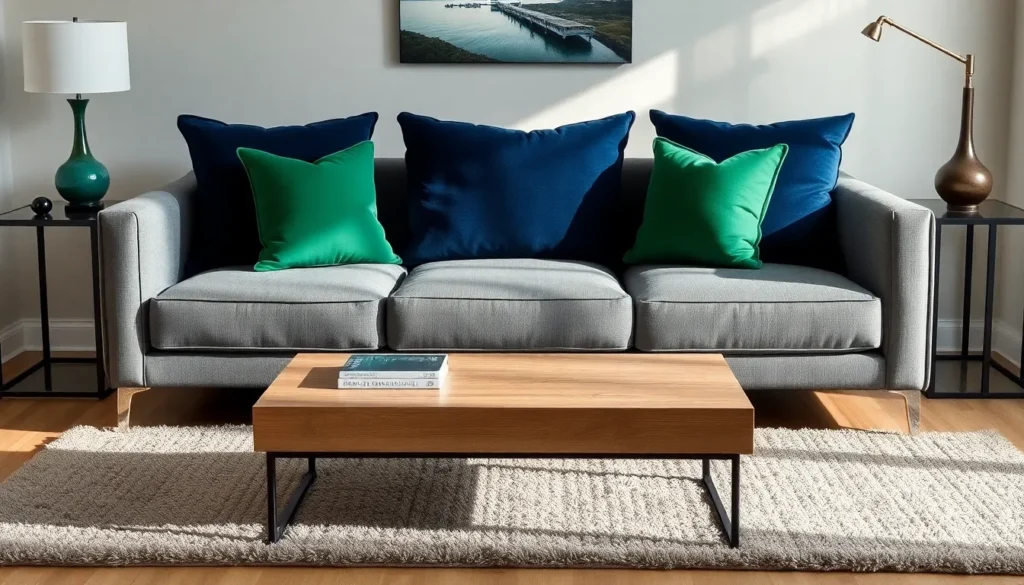
Transitional style interior design blends comfort with modern aesthetics, creating inviting living spaces. This style shines through its thoughtful detailing in key areas.
Color Palette
Neutral tones dominate the color palette in transitional living rooms. Soft grays, creams, and beiges provide a warm backdrop, allowing vibrant accent colors to stand out. Consider incorporating navy blue or emerald green accents for depth. Muted shades contribute to a calm atmosphere, ensuring a relaxing environment. These colors encourage flexibility in decorating, easily accommodating changing styles.
Furniture Selection
Functionality and comfort take precedence in furniture selection for transitional spaces. Structured sofas paired with ergonomic chairs create a cohesive look, supporting both style and usability. Coffee tables often feature simple designs that enhance practicality. Cushioned benches or ottomans add extra seating without overwhelming the room. Consider incorporating multifunctional pieces to maintain an airy feel while ensuring comfort.
Textures and Materials
Diverse textures enrich living rooms designed in a transitional style. Wood, metal, and glass elements enhance visual interest. Plush textiles like wool or cotton soften the look, contributing to comfort. Introducing varied textures facilitates a layered appearance, inviting tactile exploration. Natural materials such as jute or linen elevate the overall aesthetic, grounding the design in simplicity and elegance.
Combining Traditional and Contemporary Elements
Transitional style living rooms benefit from a thoughtful blend of traditional and contemporary design elements. This approach enables spaces to feel both timeless and modern, creating a welcoming atmosphere.
Designing for Balance
Balancing different design elements is crucial in transitional spaces. Textured fabrics and sleek lines should coexist to maintain visual interest. Incorporating furniture pieces that reflect both styles enhances harmony. For example, pairing a classic wingback chair with a sleek glass coffee table fosters connectivity between eras. In addition, using a muted color palette allows vibrant accents to stand out without overwhelming the room. Successfully combining these elements brings a sense of peace and sophistication to the living area.
Focal Points in the Living Room
Focal points draw attention and anchor the room. Options include statement artwork or an eye-catching fireplace. Selecting a large canvas with bold colors can energize the space, while a minimalist mantle offers a contemporary touch. Lighting fixtures also serve as significant focal features, especially when they juxtapose traditional and contemporary styles. For instance, a wrought iron chandelier can complement modern furniture. Highlighting these points creates interest without cluttering the design, ensuring the living room feels cohesive.
Essential Decor and Accessories
In transitional style interior design, decor and accessories play a crucial role in enhancing the overall aesthetic. Thoughtful selections elevate the living space while maintaining harmony between traditional and contemporary elements.
Lighting Choices
Lighting choices significantly influence the ambiance of a transitional living room. Ambient fixtures, such as chandeliers or flush mounts, create a warm base light. Incorporating task lighting through floor lamps or table lamps offers functionality and enhances specific areas, like reading nooks. Statement pieces, such as oversized pendant lights, serve as focal points that draw attention. Mix materials like metal and glass to achieve balance and integrate various textures into the room. This combination ensures a welcoming environment that complements the visual appeal of the decor.
Artwork and Decor Items
Artwork and decor items contribute to personal expression within the transitional design framework. Selecting large-scale art pieces adds a striking focal point, establishing a strong presence in the room. Gallery walls featuring a blend of photography, paintings, and prints create visual interest while reflecting individual style. Decorative accessories, including vases, sculptures, and books, enhance the room’s character without overwhelming the space. Incorporating natural elements like plants or driftwood brings warmth and life to the decor, grounding the overall design in both style and comfort.
Transitional style interior design in the living room offers a unique blend of comfort and sophistication. By seamlessly merging traditional and modern elements, it creates a space that feels both inviting and stylish. The emphasis on neutral palettes paired with vibrant accents allows for personalization while maintaining a cohesive look.
Carefully chosen furniture and diverse textures enhance the overall aesthetic, making the living room a true reflection of individual taste. Lighting plays a pivotal role in setting the mood and functionality, ensuring every corner feels welcoming. With thoughtful decor choices and natural elements, a transitional living room becomes a perfect sanctuary for relaxation and connection. Embracing this style not only elevates the space but also enriches everyday living.