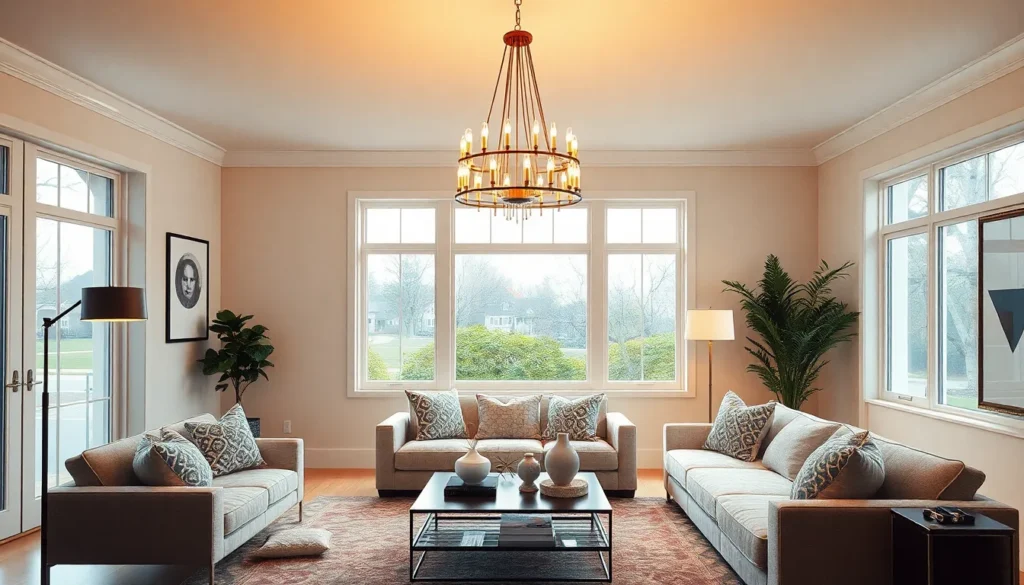
Lighting can transform a space, creating ambiance and highlighting design features. Whether it’s a cozy living room or a sleek kitchen, the right lighting sets the mood and enhances functionality. With so many options available, choosing the perfect interior lighting can feel overwhelming, but it doesn’t have to be.
From statement chandeliers to subtle recessed lighting, innovative ideas abound for every style and budget. This guide explores various interior lighting concepts that not only illuminate but also elevate the overall aesthetic of any room. Discover how to blend style with practicality and turn your home into a well-lit haven.
Interior Lighting Ideas Overview
Interior lighting plays a crucial role in enhancing the overall aesthetics and functionality of a space. Various lighting options suit distinct areas within a home. Familiarity with different styles can aid in making informed decisions.
Types of Interior Lighting
- Ambient Lighting: Provides overall illumination, ensuring visibility in all areas. Common fixtures include ceiling-mounted lights and wall sconces.
- Task Lighting: Designed to highlight specific activities. Examples include reading lamps and under-cabinet lights in kitchens.
- Accent Lighting: Highlights decorative elements or artwork. Track lighting and wall-mounted fixtures often serve this purpose.
- Natural Lighting: Relies on windows and skylights, bringing the outdoors in. It can significantly improve mood and energy levels.
Popular Lighting Fixtures
- Chandeliers: Serve as elegant focal points in dining rooms and entryways. They vary in style from traditional to modern.
- Recessed Lights: Offer a sleek, unobtrusive look, perfect for kitchens and living rooms. They integrate seamlessly into ceilings.
- Floor Lamps: Provide versatile lighting options and add decor elements in living spaces and bedrooms.
- Pendant Lights: Hang over kitchen islands or dining tables, combining functionality and style.
Lighting Color Temperature
- Warm White (2700K-3000K): Creates a cozy atmosphere, ideal for living rooms and bedrooms.
- Cool White (3500K-4100K): Suitable for kitchens and bathrooms, providing a clean, bright light for tasks.
- Daylight (5000K-6500K): Mimics natural sunlight, beneficial for spaces requiring attention to detail, like home offices or craft areas.
Tips for Layering Lighting
- Combine Different Types: Use ambient, task, and accent lighting together for a balanced approach.
- Vary Fixture Heights: Incorporate fixtures at varying heights for visual interest and depth.
- Adjust Elements Based on Space: Tailor lighting choices according to the size and purpose of each room.
Understanding these concepts can simplify the process of selecting the right lighting for any interior space.
Types of Interior Lighting
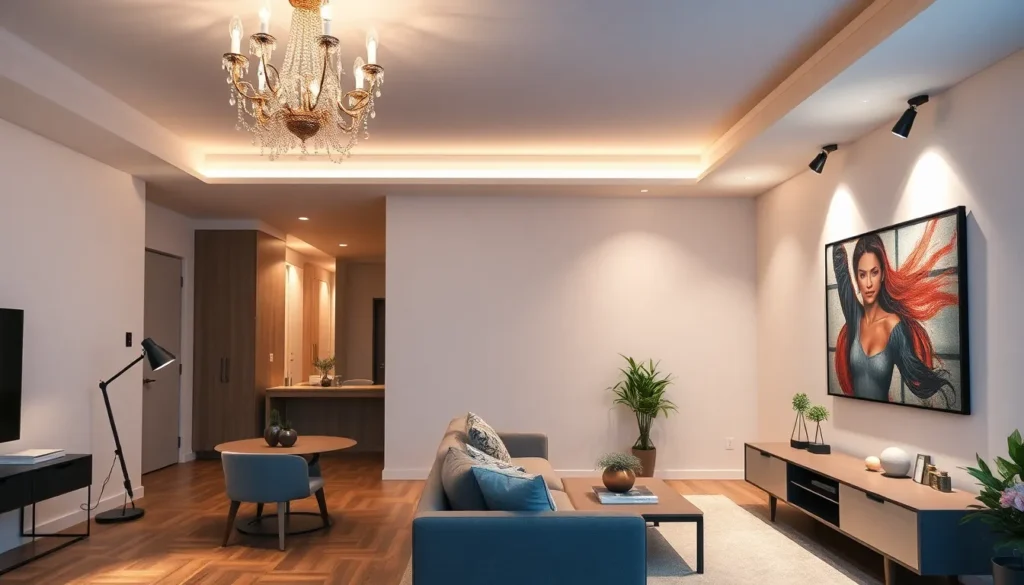
Understanding the various types of interior lighting enhances any living space. Each lighting category serves a specific function, creating a harmonious balance throughout the home.
Ambient Lighting
Ambient lighting provides overall illumination, ensuring spaces are well-lit and comfortable. Common fixtures include ceiling-mounted lights, chandeliers, and wall sconces. This type of lighting sets the foundational brightness of a room, making it functional for daily activities. Soft, diffused light is often preferred, as it minimizes harsh shadows. Energy-efficient options like LED bulbs offer a range of color temperatures to suit different atmospheres.
Task Lighting
Task lighting focuses on specific areas to enhance visibility for activities. Popular fixtures are desk lamps, under-cabinet lights, and floor lamps. This lighting is essential in areas like kitchens and home offices, where detailed tasks occur. Bright, directed light is vital for reading, cooking, or working, ensuring that individuals can perform tasks safely and effectively. Adjustable fixtures allow customization based on individual needs.
Accent Lighting
Accent lighting highlights specific features or decor elements in a room. Common fixtures include track lights, spotlights, and wall-mounted fixtures. This type of lighting draws attention to artwork, architectural details, or plants. Brightness levels often exceed that of ambient lighting, creating a dramatic effect that enhances visual interest. Dimmable options provide further flexibility, allowing users to adjust intensity depending on the occasion.
Choosing the Right Fixtures
Selecting the right lighting fixtures significantly impacts a room’s ambiance and functionality. Understanding styles and trends, along with energy efficiency considerations, aids in making informed choices.
Styles and Trends
- Modern Fixtures: Modern fixtures often feature sleek lines and minimalistic designs, creating a contemporary feel. Popular options include pendant lights with geometric shapes and wall-mounted sconces with integrated LEDs.
- Vintage Styles: Vintage-inspired fixtures, such as Edison bulb chandeliers and wrought iron lanterns, add charm to spaces. These fixtures blend nostalgia with contemporary function, appealing to those seeking a unique aesthetic.
- Industrial Designs: Industrial lighting, characterized by exposed bulbs and raw materials, suits urban-themed decor. Styles like factory pendant lights and pipe fixtures introduce an edgy vibe.
- Natural Elements: Fixtures incorporating wood, rattan, or stone evoke a warm, organic atmosphere. These designs work well in spaces emphasizing natural materials and sustainability.
- Smart Lighting: Smart fixtures provide enhanced control over lighting through apps or voice commands. Products like smart bulbs or programmable ceiling lights offer versatility in mood and efficiency.
Energy Efficiency Considerations
- LED Bulbs: LED lights consume up to 75% less energy than traditional incandescent bulbs, offering substantial savings on electricity bills.
- CFL Options: Compact fluorescent lights (CFLs) provide an energy-efficient alternative, using about 70% less energy compared to incandescent light while lasting longer.
- Smart Controls: Utilizing smart switches or dimmers allows users to reduce energy consumption by adjusting light brightness according to needs.
- Daylight Harvesting: Utilizing fixtures that maximize natural light, such as skylights or large windows, minimizes reliance on artificial lighting during the day.
- Energy Star Ratings: Choosing fixtures with Energy Star ratings ensures compliance with energy efficiency standards, promoting reduced energy use and environmental impact.
Creative Interior Lighting Ideas
Innovative lighting solutions can enhance the character of any space while ensuring functionality. Two key methods for achieving effective lighting include layering light and using dimmer switches.
Layering Light
Layering light combines ambient, task, and accent lighting to create a balanced and dynamic atmosphere. This technique involves:
- Ambient Lighting: It provides general illumination. Ceiling-mounted fixtures, wall sconces, and floor lamps play essential roles.
- Task Lighting: This focuses on specific areas for activities, such as reading or cooking. Desk lamps and under-cabinet lights serve this purpose effectively.
- Accent Lighting: This highlights architectural features or artwork, adding visual interest. Track lights, spotlights, or wall-mounted fixtures can accentuate focal points.
Effective layering uses multiple sources at different heights. By adjusting the intensity and positioning of fixtures, one can transform a room’s mood.
Using Dimmer Switches
Installing dimmer switches offers versatility in lighting control. Dimmer switches enable:
- Adjustable Brightness: Users can easily modify the light level based on the time of day or activity.
- Enhanced Ambiance: Softer lighting creates a cozy atmosphere for evenings and gatherings, while brighter settings are ideal for tasks and productivity.
- Energy Savings: Lowering light levels can reduce energy consumption, contributing to overall efficiency.
Incorporating dimmer switches into existing lighting setups allows for immediate transformation and customization of any interior space.
Effective interior lighting can elevate any space from ordinary to extraordinary. By understanding the various types of lighting and their specific functions, homeowners can create a harmonious atmosphere that suits their lifestyle. The right fixtures not only enhance aesthetics but also improve functionality, making spaces more enjoyable and practical.
Incorporating innovative ideas like layered lighting and smart controls can further enhance the experience. With careful consideration of color temperatures and energy-efficient options, anyone can transform their home into a well-lit haven. Embracing these interior lighting concepts can lead to a brighter and more inviting environment, fostering comfort and style throughout the home.