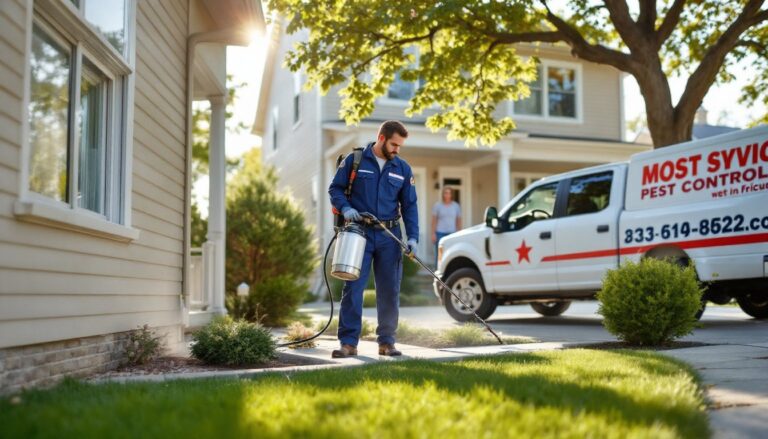
Pest problems don’t wait for convenient timing or generous budgets. A line of ants marching across the kitchen counter at 11 PM or the telltale droppings behind the pantry demand immediate action. While professional exterminators can run $300–$600 per treatment depending on the pest and home size, many common infestations respond well to DIY methods that cost a fraction of that amount. The key is knowing which pests you’re dealing with, using the right products correctly, and addressing the conditions that attracted them in the first place. This guide walks through the tools, techniques, and prevention strategies that actually work.
Table of Contents
ToggleKey Takeaways
- DIY home pest control can cost $30–$80 compared to professional treatments at $300–$600 per visit, making it an affordable option for common infestations like ants, roaches, and rodents.
- Correct pest identification is essential before treatment—carpenter ants require different approaches than sugar ants, and knowing whether you’re dealing with mice or rats determines trap selection and entry point sizes.
- Build a basic pest control kit with caulk guns, diatomaceous earth, boric acid, ant baits, snap traps, and an N95 mask to address most household infestations effectively.
- Prevention strategies like sealing cracks, maintaining proper grading around foundations, storing food in rigid containers, and conducting monthly inspections eliminate the conditions that attract pests in the first place.
- Professional pest control is necessary for termites, bed bugs, and large rodent infestations that exceed two DIY treatment cycles, as these require specialized equipment and licensed expertise.
Why DIY Pest Control Makes Sense for Homeowners
Cost savings drive most homeowners to try DIY methods first, and for good reason. A typical quarterly pest control service contract runs $100–$150 per visit, totaling $400–$600 annually. Compare that to a $30–$80 investment in DIY products that often provide multiple applications.
Timing matters too. When pests appear, scheduling a professional visit can take days or weeks depending on demand and season. DIY products from hardware stores or online retailers let homeowners address problems the same day they’re discovered.
That said, DIY pest control has limits. Termites, bed bugs, and large rodent infestations usually require professional treatment because of the specialized equipment, pesticides, and expertise needed. Structural damage from carpenter ants or termites also needs a licensed inspector to assess whether repairs fall under homeowner’s insurance. If a problem persists after two DIY treatment cycles, or if anyone in the household has respiratory issues that make pesticide use risky, call a licensed pest management professional.
Essential Tools and Products for Effective Pest Management
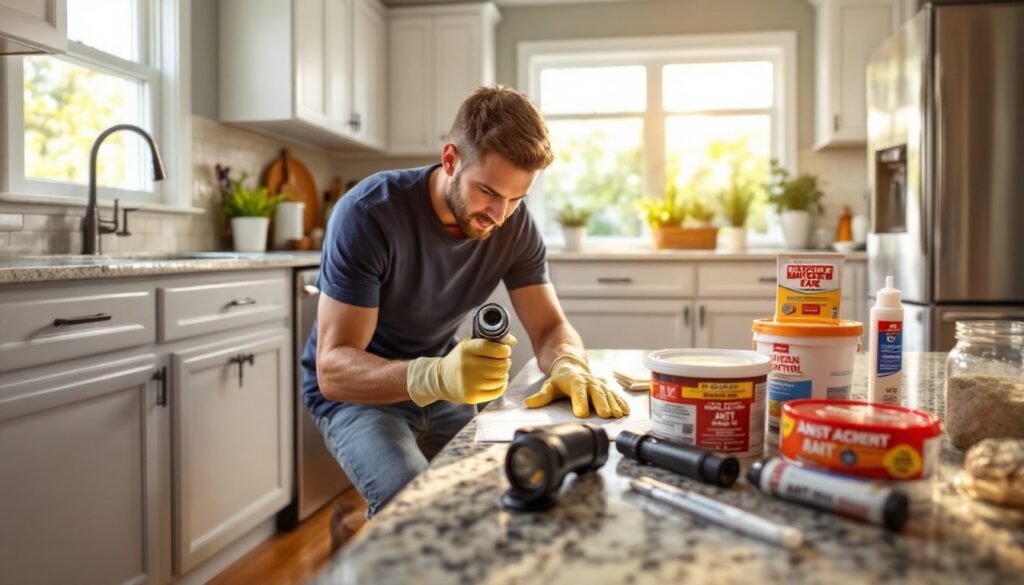
Building a basic pest control kit keeps homeowners ready for most common infestations. Here’s what belongs in it:
Core supplies:
- Flashlight or headlamp – Essential for inspecting crawl spaces, attics, and under sinks where pests hide
- Caulk gun and silicone caulk – Seals cracks and gaps where insects enter
- Putty knife or scraper – Removes old caulk and cleans surfaces before sealing
- Measuring cup and spray bottle – For mixing and applying liquid treatments
- Disposable gloves (nitrile or latex) – Protects hands when handling baits and sprays
- N95 respirator mask – Required when applying dust formulations or working in confined spaces
- Shop vacuum with HEPA filter – Removes pest debris without spreading allergens
Treatment products:
- Boric acid powder – Low-toxicity option for roaches, silverfish, and ants (keep away from pets and kids)
- Diatomaceous earth (food-grade) – Mechanical insecticide that works on crawling insects
- Pyrethrin or permethrin spray – Broad-spectrum insecticide derived from chrysanthemums, effective on most insects
- Ant bait stations – Contain slow-acting poison that workers carry back to colonies
- Snap traps and glue boards – For mice and rats (check local regulations on glue traps)
- Insect growth regulator (IGR) – Disrupts reproduction cycles for roaches and fleas
Avoid foggers and bug bombs for most situations. They drive pests deeper into wall voids without eliminating them, and the airborne pesticide settles on food-prep surfaces. Targeted applications work better and use less chemical.
Identifying Common Household Pests and Their Entry Points
Effective treatment starts with correct identification. Different pests require different approaches, and misidentification wastes time and money.
Ants: Look for trails leading to food sources. Carpenter ants (large, black) indicate moisture-damaged wood and require different treatment than sugar ants (small, brown/black). Check along foundation edges, utility penetrations, and anywhere branches touch the house.
Roaches: German roaches (small, tan with two dark stripes) infest kitchens and bathrooms, breeding in warm, moist areas. American roaches (large, reddish-brown) enter through sewer lines and floor drains. Search behind appliances, under sinks, and in cabinet hinges. Seeing roaches during daylight indicates a large population.
Mice and rats: Droppings tell the story, mouse droppings measure 1/8–1/4 inch and taper at the ends: rat droppings reach 3/4 inch and have blunt ends. Check for rub marks (dark, oily smudges) along baseboards where rodents travel. They can squeeze through openings as small as 1/4 inch for mice and 1/2 inch for rats.
Spiders: Most household spiders are beneficial and eat other pests. Webs in corners, windows, and storage areas indicate active hunting. Only brown recluse and black widow spiders pose health risks in the U.S.
Wasps and bees: Paper wasps build exposed, umbrella-shaped nests under eaves and deck railings. Yellowjackets nest underground or in wall voids. Treat nests at dusk when insects are less active.
Common entry points across all pests:
- Gaps around pipes, wires, and HVAC lines penetrating walls
- Worn weatherstripping on doors and windows
- Foundation cracks wider than 1/16 inch
- Soffit and fascia gaps where roof meets walls
- Torn window screens
- Gaps under garage doors
- Dryer vent openings without proper screening
Natural and Chemical Treatment Options That Actually Work
The “natural vs. chemical” debate misses the point, both categories include effective and ineffective options. Choose based on the pest, infestation level, and household circumstances.
Natural methods with proven results:
Diatomaceous earth (DE) works mechanically rather than chemically. The microscopic sharp edges damage insect exoskeletons, causing dehydration. Apply a thin layer (you should barely see it) in cracks, behind appliances, and along baseboards. Many household solutions use common materials to achieve similar results. Food-grade DE is safe around pets once settled, but wear a respirator during application, it irritates lungs.
Boric acid is a naturally occurring mineral toxic to insects but relatively low-risk for mammals when used correctly. It’s especially effective against roaches and silverfish. Mix 1 part boric acid with 1 part powdered sugar, place in shallow dishes in areas pets can’t reach. Never apply where food is prepared.
Essential oils have limited effectiveness even though popular claims. Peppermint oil may repel some insects temporarily but won’t eliminate an infestation. Save your money for proven products.
Chemical options for serious infestations:
Pyrethroids (permethrin, bifenthrin, cypermethrin) are synthetic versions of natural pyrethrins. They work fast on contact and provide residual protection for weeks. Apply as a barrier treatment around foundation perimeters, focusing on entry points. Follow label dilution rates exactly, more isn’t better and can cause pest avoidance or resistance.
Insect growth regulators (IGRs) like hydroprene and methoprene disrupt reproduction without killing adults immediately. They’re particularly effective against roaches and fleas when combined with adulticides. Results take 4–6 weeks but provide long-term control.
Ant baits containing borax, fipronil, or hydramethylnon work slowly, allowing workers to share the poison throughout the colony before dying. Place baits along ant trails but don’t spray them with insecticide, you want ants to feed and return to the nest.
Safety notes:
- Read labels completely before purchase. The EPA registration number, active ingredients, and target pests must match your situation
- Store all pesticides in original containers, locked away from children and pets
- Never transfer pesticides to unmarked bottles
- Apply products in well-ventilated areas
- Wait the specified re-entry time before allowing people or pets into treated areas
Step-by-Step DIY Pest Control Methods for Different Infestations
Ant Control
- Identify the species – Take a clear photo and compare to online guides or submit to a university extension service
- Locate the nest – Follow worker ants returning from food sources, typically in late afternoon
- Deploy bait stations – Place them along trails and near suspected nest locations: replace every 2–3 months
- Seal entry points – Caulk cracks and gaps after baiting begins (sealing first may just move the problem)
- Eliminate attractants – Fix leaky faucets, store food in airtight containers, take trash out nightly
Roach Treatment
- Deep clean before treatment – Roaches hide in grease and food debris: remove it so they encounter bait and insecticide
- Apply boric acid or DE – Target areas behind appliances, under sinks, in cabinet corners, and along baseboards
- Place gel bait – Apply pea-sized dots in cracks, along cabinet interiors, and behind appliances every 10–12 inches
- Spray residual insecticide – Apply along baseboards and in entry points: avoid areas with bait (insecticide repels roaches from bait)
- Install door sweeps – Roaches migrate from neighboring units in multi-family buildings
- Repeat treatment – Apply fresh bait every 2 weeks for 6–8 weeks to break the reproduction cycle
Rodent Control
- Inspect and seal entry points – Use steel wool and expanding foam for holes up to 2 inches: larger openings need 1/4-inch hardware cloth or metal flashing
- Set multiple traps – Place snap traps perpendicular to walls with the trigger end facing the baseboard: use 6–12 traps for a typical home
- Bait properly – Peanut butter, bacon, or chocolate works better than cheese: secure bait with thread or wire so rodents can’t steal it
- Check traps daily – Dispose of carcasses in sealed plastic bags: wear gloves and wash hands thoroughly
- Avoid poison in most cases – Rodenticides cause animals to die inside walls, creating odor problems: use them only in exterior bait stations if necessary
Spider and Web Removal
- Vacuum webs and egg sacs – A shop vac with extension wand reaches corners and ceiling joists
- Apply residual insecticide – Spray along window and door frames, soffits, and foundation (spiders walk through it when hunting)
- Reduce outdoor lighting – Bugs attracted to lights draw spiders: use yellow or sodium vapor bulbs that attract fewer insects
- Control prey insects – Eliminating the food source reduces spider populations naturally
Some proven techniques rely on targeted application rather than whole-house treatments, conserving both product and effort.
Prevention Strategies to Keep Pests Out Long-Term
Successful pest management relies more on prevention than treatment. These strategies work across most pest types:
Exterior maintenance:
- Trim vegetation – Keep shrubs and tree branches at least 12 inches from siding: branches touching the house create pest highways
- Grade soil away from foundation – Slope should drop 6 inches over 10 feet to prevent moisture accumulation
- Clean gutters quarterly – Clogged gutters overflow onto siding and create damp conditions
- Store firewood properly – Stack it at least 20 feet from the house, raised 6 inches off the ground
- Install door sweeps – Replace if you can see daylight under closed doors
Interior habits:
- Fix moisture problems immediately – Repair leaky pipes, improve ventilation in bathrooms, use dehumidifiers in damp basements
- Store food in rigid containers – Plastic bags and cardboard boxes don’t stop pests: use glass or heavy plastic with tight lids
- Take trash out nightly – Rinse recyclables before storing them
- Vacuum weekly – Food crumbs under furniture and in corners feed pests
- Declutter storage areas – Cardboard boxes provide harborage for roaches and nesting material for rodents: use plastic bins instead
Structural sealing:
- Caulk cracks and gaps – Inspect foundation, window frames, and utility penetrations annually: reapply caulk as it shrinks and cracks
- Screen all vents – Attic vents, crawl space vents, and dryer vents need 1/4-inch mesh screening
- Repair weatherstripping – Test door and window seals by holding a lit incense stick near the edge on a windy day: smoke movement indicates air gaps
- Install wire mesh over larger openings – Chimney caps and attic vents need 1/4-inch hardware cloth to exclude rodents and birds
Monitoring:
- Conduct monthly inspections – Walk the entire house with a flashlight, checking attic, crawl space, garage, and basement for signs of activity
- Place monitoring traps – A few glue boards in the garage, basement, and under sinks provide early warning
- Keep a pest log – Note dates, locations, and pest types to identify patterns and problem areas
Consistent general pest control practices create an environment that’s simply too hostile for most pests to establish populations. The techniques demonstrated in practical guides show how systematic approaches outperform reactive treatments.
Prevention costs less than treatment and causes less disruption. An afternoon spent caulking and installing door sweeps prevents months of battling an established infestation.
Conclusion
DIY pest control succeeds when homeowners correctly identify the pest, choose appropriate products, and address the underlying conditions that attracted them. Most common household pests respond to consistent treatment and prevention efforts without professional help. The exceptions, termites, bed bugs, and large rodent populations, require specialized equipment and expertise that justify the cost of hiring a licensed professional. Start with monitoring and prevention, escalate to targeted treatments when needed, and maintain vigilance through regular inspections.