Pests don’t respect property lines. Whether it’s ants trailing across the kitchen counter, mice nesting in the garage, or roaches appearing after dark, every homeowner eventually faces an unwanted guest problem. The home pest control market has expanded dramatically, offering everything from ready-to-use aerosols to sophisticated electronic traps. But more options don’t always mean clearer choices. Understanding what’s available, how products actually work, and which solutions match specific pest problems can save money, time, and repeated trips to the hardware store. This guide breaks down the main categories of home pest control products, evaluates natural alternatives, and covers the safety considerations that matter when treating spaces where people and pets live.
Table of Contents
ToggleKey Takeaways
- Home pest control products fall into four main categories—sprays, residual barriers, traps, and baits—each with distinct advantages depending on the pest type and infestation severity.
- Bait stations and traps are often more effective than foggers for common infestations, as they target where pests hide rather than dispersing chemical mist throughout entire rooms.
- Natural pest control options like diatomaceous earth and boric acid can work well for crawling insects, but require more frequent application and may not handle severe infestations as effectively as conventional products.
- Accurate pest identification is essential before selecting home pest control products, since many treatments are pest-specific and using the wrong solution can worsen infestations or cause bait aversion.
- Always follow label directions exactly, wear proper protective equipment (gloves, glasses, respirator), and store pest control products securely in original containers away from children and pets.
- Professional pest control services often provide better value than cycling through multiple DIY home pest control products for persistent, severe, or complex infestations like bed bugs or termites.
Understanding Different Types of Home Pest Control Products
The pest control aisle can feel overwhelming, but most products fall into a few main categories based on delivery method and how they work. Each type has distinct advantages depending on the pest, the location, and how quickly results are needed.
Sprays and Aerosols
Contact sprays kill on impact, making them useful for visible pests like spiders, ants, or flies. These products typically contain pyrethroids, synthetic versions of compounds derived from chrysanthemum flowers. They’re fast-acting and widely available, but they don’t provide residual protection once the spray dries. Expect to reapply after rain or cleaning.
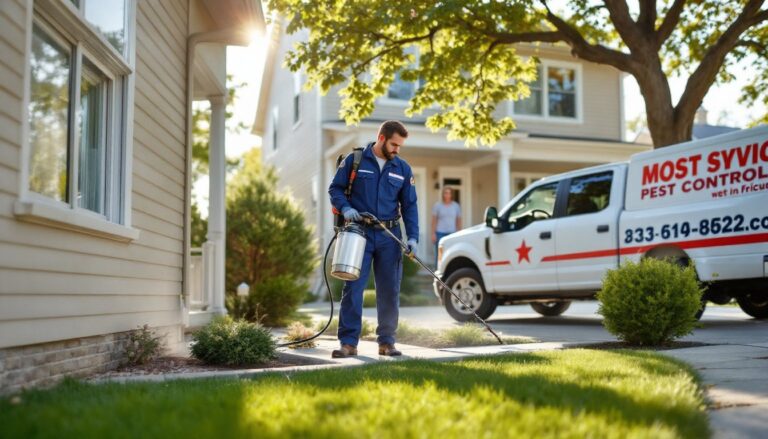
Residual barrier sprays leave a chemical film that continues killing pests for weeks or months. Applied along baseboards, door frames, and foundation perimeters, these create a defensive line that intercepts crawling insects before they get inside. Most contain bifenthrin or lambda-cyhalothrin and can remain effective for 30–90 days depending on weather exposure and surface type. When applying barriers, focus on entry points: gaps around pipes, window wells, garage door thresholds, and weep holes in brick veneer.
Aerosol foggers or “bug bombs” release a fine mist that disperses throughout an enclosed space. They’re marketed for whole-room treatment, but effectiveness is limited. The mist doesn’t penetrate behind walls, inside cabinets, or under furniture where pests actually hide. Foggers also pose fire hazards if used near pilot lights or electronics, and they require vacating the home for several hours. For general infestations like fleas or roaches, targeted spray applications or baits usually deliver better results with less hassle.
Traps and Baits
Snap traps remain the gold standard for mice. They’re inexpensive, reusable, and provide immediate confirmation of a catch. Set traps perpendicular to walls where rodents travel, with the trigger end facing the baseboard. Bait with a pea-sized dab of peanut butter, not cheese, even though cartoons, mice prefer high-protein, high-fat foods. Check traps daily and dispose of carcasses promptly to avoid odor issues.
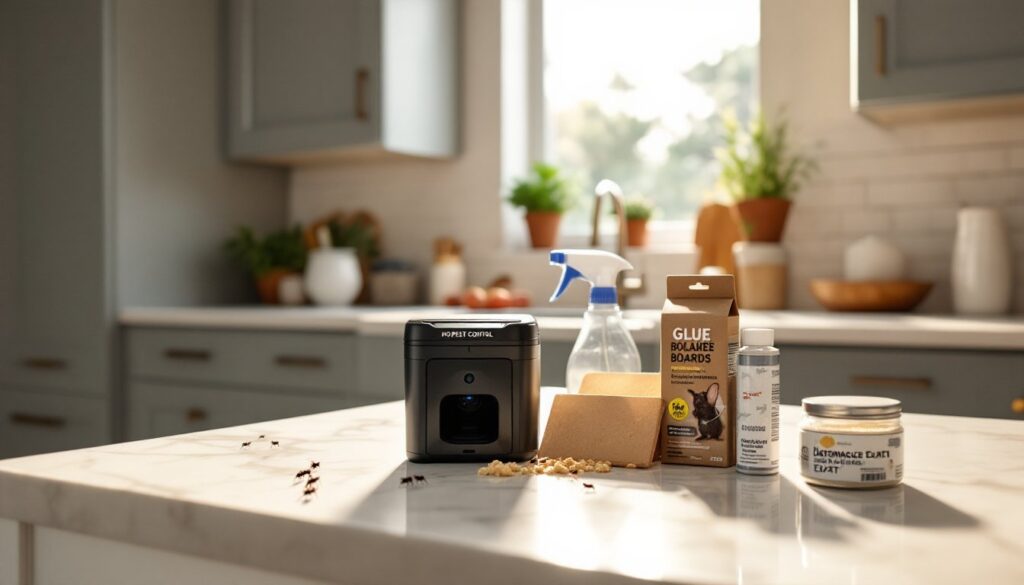
Glue boards work for both rodents and crawling insects. They’re non-toxic and effective in tight spaces where snap traps won’t fit, like behind appliances or inside cabinets. But, they can be inhumane for larger rodents, which may suffer prolonged distress. Some jurisdictions restrict glue board use for that reason.
Bait stations for rodents contain anticoagulant rodenticides in tamper-resistant containers. The pest eats the bait, returns to its nest, and dies within a few days. This delayed action prevents bait shyness, a learned avoidance that happens with fast-acting poisons. Always use enclosed stations, especially around children and pets. Place stations along walls where droppings or gnaw marks indicate activity. According to Good Housekeeping, rodent baits should be checked weekly and replenished until feeding stops.
Insect baits work differently depending on the target. Ant baits use slow-acting toxins mixed with attractants like sugar or protein. Worker ants carry the bait back to the colony and share it, eventually reaching the queen. It takes 3–7 days to see results, and during that time, ant activity may actually increase as more workers are recruited to the food source. Don’t spray ants you see near bait stations, you’ll disrupt the transfer process. For persistent infestations, combining baits with general pest control practices improves overall effectiveness.
Roach baits come in gel or station form and contain insect growth regulators (IGRs) or stomach poisons. Apply gel baits in cracks, along cabinet hinges, and behind appliances where roaches hide during the day. Avoid placing bait on recently cleaned surfaces: residual cleaning products can repel pests.
Natural and Eco-Friendly Pest Control Options
Natural pest control products appeal to homeowners concerned about chemical exposure, but “natural” doesn’t always mean “safe” or “effective.” Some plant-based ingredients can irritate skin or lungs, and efficacy varies widely by pest and formulation.
Diatomaceous earth (DE) is a powder made from fossilized algae. Its microscopic sharp edges damage the waxy coating on insect exoskeletons, causing dehydration and death. Food-grade DE is non-toxic to mammals and works well for crawling insects like ants, roaches, and silverfish. Apply a light dusting in dry areas: behind appliances, along baseboards, and in attics or crawl spaces. It stops working when wet, so it’s not suitable for damp basements or outdoor use in rainy climates.
Essential oil sprays containing peppermint, clove, or cedar oil can repel certain pests and kill soft-bodied insects on contact. But, they break down quickly and require frequent reapplication. They’re best used as supplementary measures rather than primary treatments. A study on cleaning techniques from The Spruce notes that essential oils also provide pleasant scents for home environments, which chemical sprays typically don’t.
Boric acid is a naturally occurring mineral that’s been used for pest control for over a century. It’s particularly effective against roaches and ants. The powder clings to pests, who ingest it while grooming, leading to death within days. Boric acid has low toxicity to humans and pets when used correctly, but it should be kept out of reach and applied only in areas inaccessible to children and animals. Dust it into wall voids, under appliances, and behind outlet covers.
Botanical insecticides like pyrethrin (derived from chrysanthemums) and neem oil (from neem tree seeds) offer plant-based alternatives to synthetic chemicals. Pyrethrin works quickly but degrades rapidly in sunlight, making it better for indoor use. Neem oil disrupts insect growth and reproduction but doesn’t provide instant knockdown. For those seeking pet-friendly exterminators, many professionals now integrate these botanical options into treatment plans.
It’s worth noting that natural products often require more frequent application and may not handle severe infestations as effectively as conventional pesticides. They work best as part of an integrated approach that includes sanitation, exclusion, and habitat modification.
How to Choose the Right Pest Control Product for Your Home
Matching the product to the pest and the situation prevents wasted effort and repeat purchases. Start by accurately identifying what you’re dealing with, a pill bug problem needs different treatment than a carpenter ant infestation.
Identify the pest first. Snap a clear photo and compare it to online resources or bring a specimen to a local extension office for free identification. Many products are pest-specific, and using the wrong one won’t just fail, it might make things worse by scattering insects or causing bait aversion.
Assess the infestation level. A few ants on the counter can be handled with bait stations and sealing entry points. A trailing line from an exterior nest might require both indoor baits and outdoor perimeter treatment. Heavy infestations, especially of roaches, bed bugs, or termites, often exceed what over-the-counter products can manage and may need expert pest services with professional-grade materials and application equipment.
Consider your home’s layout and materials. Sprays work well on non-porous surfaces like tile and vinyl but can stain or damage unsealed wood and fabrics. Dusts like diatomaceous earth are ideal for wall voids and attics but create a mess in living areas. Bait stations fit discreetly along baseboards and behind furniture. If you have extensive carpeting, look for products labeled safe for textiles.
Factor in pets and children. Read labels carefully. Products labeled “safe when dry” still pose risks during application. Bait stations should be tamper-resistant, and rodent traps need to be placed where curious hands and paws can’t reach them. When comparing options, homeowners often wonder about the cost of Orkin pest control versus DIY products, sometimes professional service offers better value for complex or recurring problems.
Match the product to the location. Indoor products aren’t always weather-resistant, and outdoor formulations may be too harsh for interior use. If treating a basement with moisture issues, choose products that remain effective in damp conditions. For attics and crawl spaces, dusts and granules often outperform sprays.
Read the fine print. Labels include active ingredients, target pests, application rates, and reentry intervals. If a product requires you to leave the house for four hours, plan accordingly. Some treatments need multiple applications spaced days or weeks apart: factor that into your timeline.
Safety Considerations When Using Pest Control Products
Pest control products are pesticides, substances designed to kill living organisms. Treating them casually increases the risk of poisoning, environmental contamination, and ineffective results. Safety isn’t just about reading the label: it’s about respecting the chemistry you’re working with.
Always wear appropriate PPE. At minimum, that means nitrile gloves and safety glasses when mixing or applying any chemical product. If spraying indoors or in confined spaces, add a respirator rated for pesticides (look for N95 or P100 filters depending on the formulation). Long sleeves and pants protect skin from accidental splashes. According to Martha Stewart, proper protective gear is essential when tackling any home project that involves chemicals.
Store products securely. Keep pesticides in their original containers in a locked cabinet away from food, pet supplies, and children’s reach. Never transfer chemicals to unmarked bottles, it’s a poisoning risk and often illegal. Check expiration dates: old pesticides lose effectiveness and can degrade into more hazardous compounds.
Follow label directions exactly. More isn’t better. Over-application wastes product, increases toxicity risk, and can cause pests to avoid treated areas. Use the specified dilution rates and coverage amounts. If the label says “apply a light dusting,” don’t lay down a visible layer. If it says “spot treatment only,” don’t spray the entire room.
Ventilate treated areas. Open windows and use fans to increase airflow during and after application. If treating with a spray or fogger, leave the space for the recommended time before reentering. Remove or cover food, dishes, and pet bowls before treating kitchens or dining areas.
Keep pets and children out of treated areas until surfaces are dry and safe for reentry. Even products labeled “pet-safe when dry” can cause irritation if pets walk through wet spray and then groom themselves. For specific concerns about pets, understanding how much is Orkin for pet-safe treatments can help homeowners decide between DIY and professional options.
Dispose of products properly. Never pour pesticides down the drain or into storm sewers, they contaminate water supplies. Most communities have hazardous waste collection days for old or unwanted pesticides. Empty containers should be triple-rinsed and then disposed of according to local regulations.
Understand your legal limits. Some pest control products and methods are restricted or require a license in certain jurisdictions. Structural fumigation, for instance, is almost always a job for licensed professionals. If you’re renting, check your lease, many landlords require notification or professional service for pest treatments.
Conclusion
Home pest control products offer powerful tools for managing common infestations, but success hinges on choosing the right product for the pest and using it correctly. Whether opting for fast-acting sprays, delayed-action baits, or natural alternatives, understanding how each type works, and where it fits, makes the difference between repeated failures and a pest-free home. Pair product selection with proper safety practices, accurate pest identification, and realistic expectations about what DIY methods can achieve. For persistent or severe problems, professional intervention often proves more cost-effective than cycling through multiple store-bought solutions.