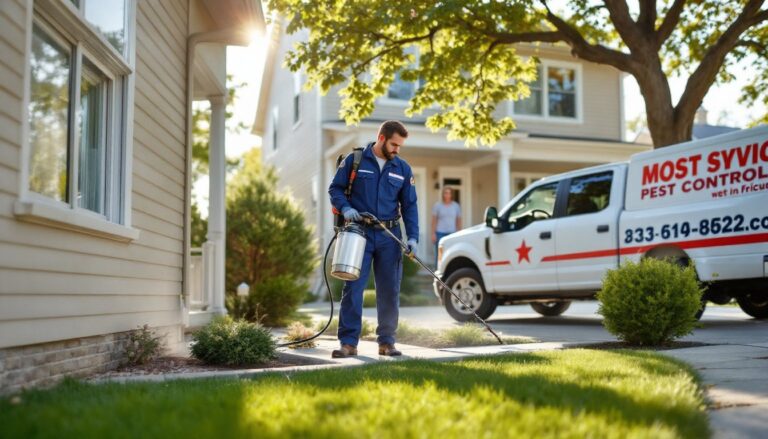
Diatomaceous earth has become a go-to solution for homeowners dealing with crawling pests, and for good reason. This natural powder works mechanically, not chemically, which means bugs can’t build resistance to it. Whether someone’s dealing with ants marching across the kitchen counter, roaches hiding under appliances, or fleas hitchhiking on pets, food-grade diatomaceous earth offers a low-toxicity option that actually works. It’s not instant like aerosol sprays, but it’s safer around kids and pets when used correctly. The catch? Application matters. Dumping it randomly won’t solve the problem, and using the wrong type can be dangerous. Here’s how to deploy it effectively.
Table of Contents
ToggleKey Takeaways
- Diatomaceous earth kills crawling pests like ants, roaches, and fleas through physical dehydration, not chemicals, so insects cannot build resistance to it.
- Always use food-grade diatomaceous earth (less than 1% crystalline silica) and avoid pool-grade DE, which contains dangerous crystalline silica that can cause lung disease.
- Apply a thin, barely visible layer of diatomaceous earth along pest pathways and entry points like baseboards and behind appliances, keeping the area dry for effectiveness.
- Wear an N95 mask and safety goggles during application, keep children and pets away for 30 minutes, and use a HEPA-filter vacuum for cleanup to prevent silica dust inhalation.
- Diatomaceous earth takes 24–72 hours to kill most pests and works best when combined with sealing cracks, removing food sources, and other integrated pest management practices.
- Outdoor use of diatomaceous earth is limited by moisture; reapply after rain and focus on dry areas like under eaves, since humidity and dew render it ineffective.
What Is Diatomaceous Earth and How Does It Kill Pests?
Diatomaceous earth (DE) is fossilized remains of diatoms, microscopic algae with silica-based skeletons. When mined and ground into powder, those skeletons become sharp-edged particles invisible to the naked eye but deadly to insects with exoskeletons.
The killing mechanism is physical, not chemical. When bugs crawl through DE, the microscopic shards abrade their waxy protective coating (the cuticle). This causes dehydration, insects lose moisture faster than they can replace it, and they dry out within 24 to 48 hours depending on the species and environmental humidity.
DE works on:
- Ants (carpenter ants, pavement ants, sugar ants)
- Roaches (German, American, Oriental species)
- Bed bugs (though mattress encasements are more reliable)
- Fleas (especially in carpets and pet bedding)
- Silverfish, earwigs, and crickets
- Beetles (carpet beetles, grain beetles)
It does not work on non-crawling pests like mosquitoes, flies, or ticks that don’t spend significant time traversing treated surfaces. And it won’t kill pests that avoid treated areas, if roaches have a clean path to food, they’ll take it.
Choosing the Right Type of Diatomaceous Earth for Home Use
There are two main types of DE, and using the wrong one is a serious health risk.
Food-grade diatomaceous earth contains less than 1% crystalline silica and is safe for use around homes, pets, and even in grain storage. The packaging should explicitly state “food grade” and list the silica content. This is what homeowners should buy for pest control. It’s available at farm supply stores, garden centers, and online in bags ranging from 4 to 50 pounds.
Pool-grade (filter-grade) diatomaceous earth is heat-treated, which converts amorphous silica into crystalline silica, a known respiratory hazard. It’s used in pool filtration systems and should never be used for pest control indoors or anywhere people and pets might breathe it. The crystalline silica content can exceed 60%, and prolonged inhalation is linked to silicosis, a serious lung disease.
When buying, check for:
- “Food Grade” label
- OMRI listing (Organic Materials Review Institute) if using in organic gardens
- Particle size: finer powder spreads more easily but creates more airborne dust
Skip products with additives or scents unless they’re specifically formulated for pest control and still list food-grade DE as the active ingredient.
Where and How to Apply Diatomaceous Earth Indoors
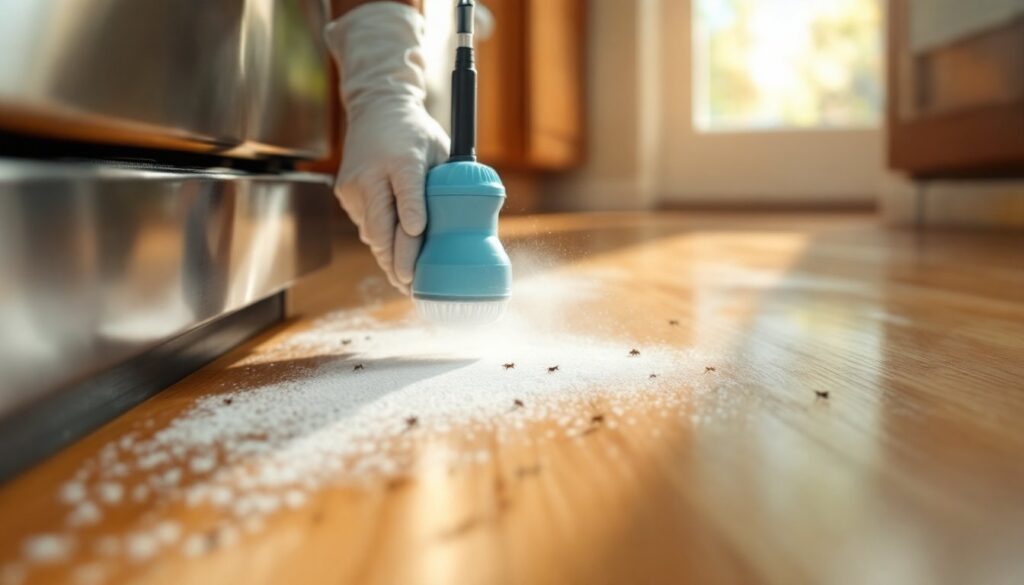
Indoor application requires precision. The goal is a light, barely visible dusting, not piles of white powder. Pests won’t cross thick clumps: they’ll walk around them.
Tools needed:
- Dust applicator (bulb duster, hand-crank duster, or a cheap condiment squeeze bottle)
- N95 respirator mask (not a cloth mask, DE dust is fine enough to bypass fabric)
- Safety goggles
- Vacuum with HEPA filter (for cleanup)
Application steps:
-
Identify pest pathways. Look for trails, droppings, or entry points. Common spots include baseboards, behind appliances, under sinks, along window sills, and inside wall voids accessed through outlet covers (power off first).
-
Clean and dry the area. DE only works when dry. Wipe down surfaces to remove food residue or grease that might clump the powder.
-
Apply a thin layer. Use the duster to puff DE into cracks, crevices, and along edges. The layer should be so thin that someone can barely see it, think flour dusting on a cutting board, not a snowdrift. In wall voids or behind outlet plates, a slightly heavier application is fine since it won’t be disturbed.
-
Target high-traffic pest zones: Under and behind refrigerators, stoves, dishwashers, and water heaters: along basement perimeters: in attics near insulation gaps: inside cabinets where pipes enter walls.
-
Reapply after vacuuming or disturbance. If someone vacuums the area or humidity causes clumping, reapply a fresh layer.
Do not apply DE:
- In areas where children or pets will play directly in it
- On countertops or food prep surfaces (it’s non-toxic but gritty)
- In forced-air ducts (it’ll spread dust throughout the home)
For carpets infested with fleas, sprinkle a light layer, work it into fibers with a broom, leave for 24-48 hours, then vacuum thoroughly with a HEPA filter.
Using Diatomaceous Earth for Outdoor Pest Control
Outdoor use is trickier because moisture renders DE useless. Rain, dew, or sprinkler overspray will turn it into a paste that won’t kill insects.
Best outdoor applications:
- Ant mounds: Dust directly onto the mound and around the perimeter in a 6–12 inch band. Reapply after rain.
- Garden bed perimeters: Create a barrier around raised beds or vegetable gardens to deter slugs, snails, and crawling insects. For effective garden pest management, pair DE with row covers and companion planting.
- Under decks and porches: Dry, sheltered areas where pests harbor. Dust floor joists, sills, and around post bases.
- Crawl spaces: If accessible and dry, apply along the perimeter and near pier supports.
Application tips:
- Apply in the morning after dew dries, ideally before rain is forecasted for at least 48 hours.
- Use a lawn spreader or hand-crank duster for larger areas.
- Focus on dry microclimates: under eaves, inside garden sheds, along foundation walls sheltered by overhangs.
Limitations outdoors:
DE won’t survive frequent watering schedules or humid climates where morning dew is heavy. In those conditions, consider bait stations or perimeter sprays formulated for outdoor use. And never apply DE on windy days, it’ll blow away and create unnecessary respiratory exposure.
Safety Precautions and Best Practices
Food-grade DE is low-toxicity, but it’s not harmless. The fine silica dust can irritate lungs, eyes, and skin with repeated exposure.
Personal protective equipment:
- N95 respirator mask: Critical. Even food-grade DE contains amorphous silica, which irritates lung tissue. Don’t skip this.
- Safety goggles: Keeps dust out of eyes during application.
- Gloves: Optional but helpful if someone has sensitive skin.
Pet and child safety:
- Keep kids and pets out of the room during application and until dust settles (about 30 minutes).
- DE is safe once settled, but discourage kids from playing in treated areas. It’s not toxic, but inhaling any fine dust isn’t ideal.
- For homes with curious toddlers, apply DE only in inaccessible areas, behind appliances, inside wall voids, under furniture.
Storage:
- Keep DE in a sealed container in a dry location. Moisture will clump it and ruin effectiveness.
- Store out of reach of children, even though it’s food-grade.
Cleanup:
- Use a vacuum with a HEPA filter. Standard vacuums exhaust fine particles back into the air.
- Wipe surfaces with a damp cloth to capture residual dust.
Environmental considerations:
DE is inert and doesn’t harm soil or plants in typical pest-control quantities. It won’t contaminate groundwater. But, avoid over-application in garden beds, heavy layers can impact beneficial insects like ground beetles and native bees that nest in soil.
If someone’s dealing with a severe infestation (think bed bugs throughout a home or termites), DE alone won’t cut it. Call a licensed pest control professional. Comprehensive home improvement projects often include integrated pest management that combines multiple strategies.
How Long Does Diatomaceous Earth Take to Work?
DE is not a knockdown treatment. Bugs won’t die instantly like they do with contact sprays.
Typical timelines:
- Ants and roaches: 24 to 72 hours after contact, depending on how much they traverse treated areas and ambient humidity. Lower humidity speeds dehydration.
- Fleas: 24 to 48 hours for adults in carpets: longer for pupae (DE doesn’t penetrate cocoons, so a second application 10–14 days later catches newly emerged adults).
- Bed bugs: Can take up to a week for thorough die-off. DE works best as part of a multi-tactic approach including encasements, heat treatment, or residual insecticides.
- Beetles and silverfish: 3 to 7 days.
Factors affecting speed:
- Humidity: High humidity slows dehydration. In damp basements, results take longer.
- Application thickness: Too thick and bugs avoid it: too thin and effectiveness drops.
- Pest species: Insects with thicker cuticles (like some beetle species) take longer to dehydrate.
How to know it’s working:
Pest activity should noticeably decline within a week. If there’s no change after 10 days, reassess:
- Is the DE still dry and in place?
- Are there untreated entry points or food sources?
- Is the infestation severe enough to need professional help?
For seasonal home maintenance tasks, integrated pest control, sealing cracks, fixing leaks, removing food sources, makes DE far more effective.
Conclusion
Diatomaceous earth works when applied correctly: thin layers in the right spots, kept dry, and given time to do its job. It’s not a miracle dust, and it won’t replace professional treatment for major infestations, but for routine pest pressure it’s a solid, low-toxicity tool. Pair it with good housekeeping, seal cracks, fix moisture problems, eliminate food sources, and most homeowners will see a real dent in crawling pest populations without reaching for harsh chemicals.