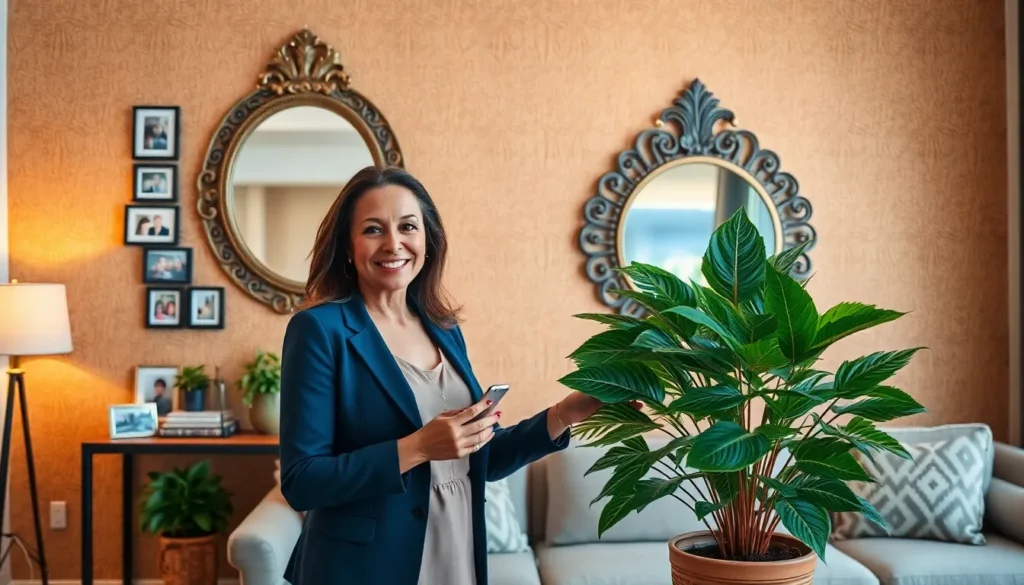
The living room is the heart of any home, where laughter echoes and memories are made. But what happens when those walls start to feel more like a blank canvas than a cozy embrace? It’s time to transform that uninspired space into a stunning showcase of style. With the right interior living room wall design, those walls can go from drab to fab faster than you can say “home sweet home.”
Overview of Interior Living Room Wall Design
Interior living room wall design plays a crucial role in defining the space’s character. Effective wall design enhances the aesthetic appeal and contributes to the overall ambiance of the room. Various elements come into play, including color, texture, and functionality.
Color selection stands out as one of the most important aspects. Warm tones like beige and soft pastels create a welcoming environment, while deeper shades like navy or charcoal can introduce sophistication. Textured finishes such as a rough stone or smooth plaster enhance visual interest and can serve as a focal point.
Wall art and decor items further enrich the design. Artwork, family photos, and decorative mirrors add personal touches and create depth. Organizing these elements effectively can transform a plain wall into an expressive canvas.
Furniture arrangement connects seamlessly with wall design. Choosing the right pieces ensures they complement the walls without overwhelming them. For example, placing a statement sofa against a bold accent wall creates a striking visual.
Lighting also influences wall design. Well-placed fixtures, like sconces or recessed lights, can highlight artwork or textures, creating dynamic visual effects. Different lighting can change the room’s mood, emphasizing either relaxation or activity.
Storage solutions integrate functionality into wall design. Built-in shelves or cabinets maximize space while providing opportunities for decorative displays. Color-coordinating these elements with the wall creates a cohesive look.
Incorporating these design aspects allows for a stylish and inviting living room. By focusing on the wall space, homeowners can create a personalized, engaging area that reflects their taste and enhances their home’s atmosphere.
Popular Design Styles
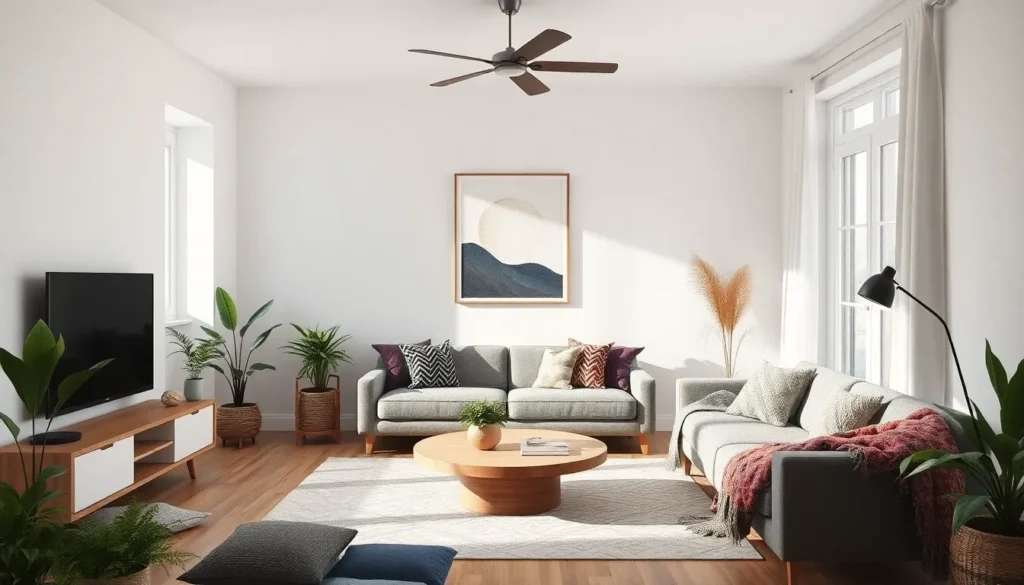
Living room wall design encompasses various styles that enhance aesthetic appeal and functionality. Three notable design styles include minimalist, bohemian, and modern.
Minimalist Design
Minimalist design emphasizes simplicity and functionality. Neutral colors dominate this style, allowing for a serene atmosphere. Clean lines and uncluttered spaces create a sense of order and tranquility. Decals or artwork featuring geometric shapes often complement the walls. Natural light becomes a critical element, enhancing the open feel while making spaces appear larger. Furniture choice aligns with minimalism, focusing on fewer pieces that maximize usability without overwhelming the design.
Bohemian Design
Bohemian design expresses creativity and individuality. Rich colors and eclectic patterns define this unique style. Textured fabrics like macramé wall hangings or woven tapestries add depth to the overall space. Layered textiles and mismatched decor create a cozy, inviting environment. Incorporation of plants and natural elements introduces life and vibrancy, enhancing the bohemian feel. This style encourages personal expression, giving homeowners the freedom to mix and match various cultural influences and designs.
Modern Design
Modern design showcases sophistication and sleekness. Bold colors and innovative materials define its elements. Wall art often features abstract prints or oversized pieces that serve as focal points. Open layouts promote airflow and natural light, contributing to a refreshing ambiance. Functionality remains a priority, with furniture designed to fit seamlessly within the modern framework. Clean surfaces and minimalistic decor support this aesthetic, creating a cohesive, stylish living room.
Materials Used in Wall Design
Interior living room wall design incorporates various materials, each contributing to the space’s character. Understanding these materials helps in making choices that enhance aesthetics and functionality.
Paint and Wallpaper
Paint offers versatility in color and finish, from matte to glossy. It’s easy to apply and refresh, allowing for seasonal changes. Wallpaper presents patterns and textures, transforming walls into focal points. Many options include vinyl or fabric, each with unique benefits. Patterned wallpaper can create visual interest, while solid colors can serve as a backdrop for artwork or furniture. Combining both can yield a dynamic effect, adding layers to the design.
Wood Paneling
Wood paneling creates warmth and texture in living rooms. Options range from natural finishes that showcase grain patterns to painted varieties for a modern twist. Shiplap or tongue-and-groove styles offer a rustic charm. Alternatively, sleek, flat-panel designs can complement contemporary aesthetics. Wood’s durability contributes to a lasting appeal, ensuring the design remains relevant over time. Accents such as molding can enhance the overall structure, further elevating the visual impact.
Stone and Brick
Stone and brick walls convey a sense of natural beauty and strength. Choosing natural stone adds an organic element, showcasing unique textures and colors. A brick feature wall can introduce an industrial vibe while offering timeless appeal. Using these materials brings depth to the design and can enhance insulation, providing practical benefits. Options include faux stone or reclaimed brick, facilitating diverse looks that fit various styles. Incorporating lighting fixtures can highlight these surfaces, creating a dramatic effect in the living room.
Enhancing Functionality
Interior wall design significantly enhances living room functionality. It creates space for storage and entertainment while keeping the aesthetics appealing.
Built-in Shelving
Built-in shelving optimizes wall space effectively. These shelves provide ample storage and display opportunities. They can showcase books, decorative items, and plants, contributing to the room’s overall character. Customization options allow homeowners to tailor sizes and styles to match their design vision. Installing built-in shelves encourages organization and minimizes clutter. Design features such as open shelving or enclosed cabinets offer versatility, accommodating both personal items and decorative elements. A well-placed shelving unit not only saves space but also draws the eye, enhancing the room’s visual appeal.
Entertainment Centers
An entertainment center serves as a focal point and functional asset. This feature centralizes media devices while maximizing space efficiency. Designers often incorporate shelves for electronics and compartments for games or DVDs. The right entertainment center complements the living room’s aesthetic, combining style and utility. Materials such as wood or metal add texture and character, while integrated lighting highlights decor and equipment. Choosing a design that matches the wall color can create a seamless look, ensuring harmony within the space. An attractive entertainment center transforms the living room into a cozy gathering spot, perfect for family movie nights or entertaining guests.
Transforming a living room through thoughtful wall design can significantly enhance its warmth and character. By carefully selecting colors textures and materials homeowners can create a space that not only looks inviting but also serves practical purposes.
Incorporating elements like wall art built-in shelving and effective lighting adds depth and personal touch to the environment. Each design style from minimalist to bohemian offers unique opportunities to reflect individual taste while maximizing functionality.
Ultimately a well-designed living room wall can become a focal point that fosters connection and comfort making it a cherished space for family and friends.