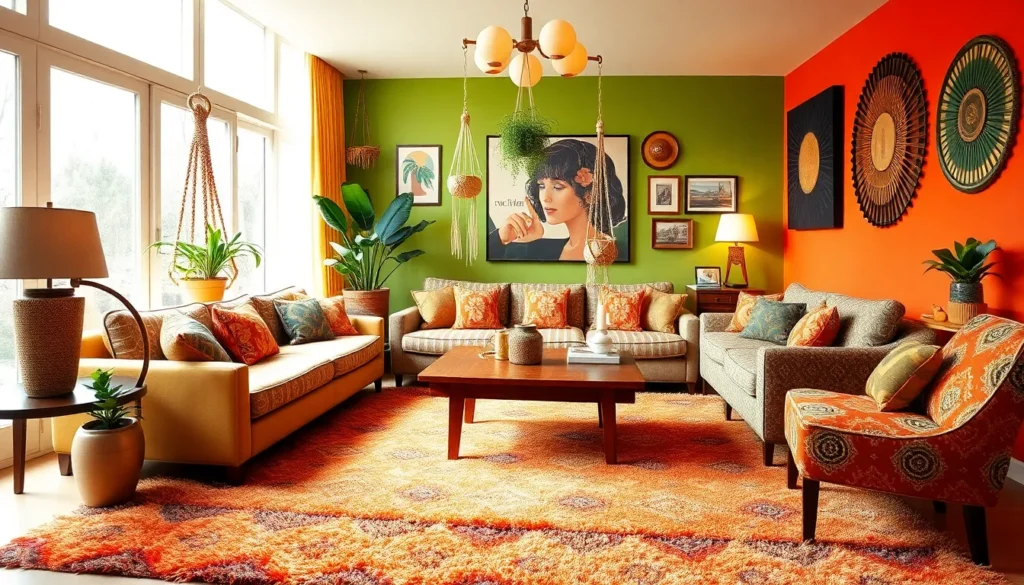
Step into a time machine and travel back to the 70s, where shag carpets and bold patterns ruled the living room. This was an era when avocado green and burnt orange weren’t just colors; they were a lifestyle. If you think today’s designs are groovy, wait until you see how the 70s transformed living spaces into vibrant, eclectic havens that screamed personality.
Overview of Living Room 70s Interior Design
Living room design in the 1970s displayed distinctive features that reflected the cultural shifts of the time. Flea market finds often adorned these spaces, showcasing collected art and eclectic decorations that conveyed a sense of warmth and character. Shag carpets became iconic elements, inviting comfort while providing a tactile contrast to other décor.
Bold colors dominated many living room palettes. Avocado green, burnt orange, and mustard yellow blended seamlessly, creating energizing atmospheres. Curtains and upholstery in lively patterns filled spaces, enhancing the visual impact.
Furniture during this era emphasized both form and function. Low-profile couches and oversized chairs offered relaxed seating options, encouraging casual gatherings. Modular pieces often served multiple purposes, showcasing versatility and adaptability in design.
Lighting played a crucial role in setting the mood. Unique lamps, including those with sculptural bases and vibrant shades, added personality and flair. Large windows typically allowed natural light to flood in, further brightening the colorful environments.
Natural materials frequently highlighted living room designs. Wood paneling graced walls, while wicker and rattan furniture brought an outdoor feel inside. Plants in macramé hangers contributed to a lively atmosphere, connecting interiors to nature.
Collectively, these elements defined the vibrant and eclectic style of 1970s living rooms. Uniqueness flourished as individualistic expressions translated into design choices that resonated with many. The fusion of comfort, color, and creativity truly transformed living spaces during this dynamic decade.
Key Characteristics of 70s Interior Design
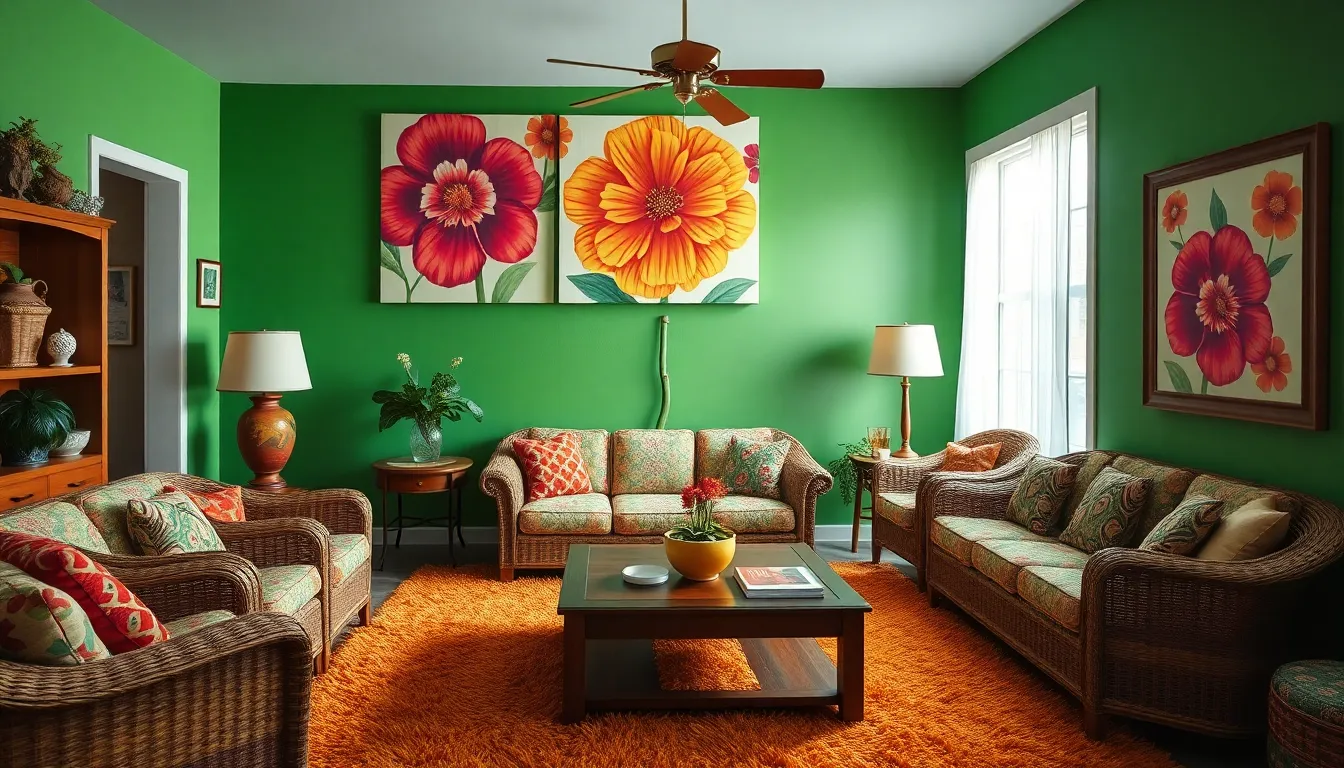
The 1970s showcased distinctive elements that defined its interior design, particularly in living rooms. Bold colors and unique patterns created an energetic vibe that still resonates today.
Bold Colors and Patterns
Bright hues dominated living room decor. Avocado green, mustard yellow, and burnt orange filled spaces with warmth. Designers employed vibrant patterns, including geometric shapes and floral motifs, to enhance visual interest. Patterns appeared on upholstery, curtains, and area rugs, creating captivating focal points. Large wall art featuring eclectic designs further enriched the aesthetic. Whether in a cozy corner or as a statement piece, these bold choices reflected individuality. Many embraced mixed prints, promoting creativity and personal style in design.
Textures and Materials
Natural materials played a significant role in 70s interiors. Wood paneling frequently adorned walls, introducing warmth and depth. Bold textiles such as shag carpets added comfort underfoot, encouraging relaxation and gathering. Wicker furniture often complemented wooden elements, infusing spaces with a rustic charm. Macramé hangers showcased trailing plants, enhancing the connection to nature. Additionally, metallic accents in decor items introduced a touch of glam. Textured surfaces contributed to a sense of richness, creating inviting and layered environments. Collectively, these materials fostered a cozy and eclectic atmosphere in living rooms.
Iconic Furniture Styles
The 1970s showcased furniture styles that embodied both comfort and bold statements. Statement chairs and sofas became essential pieces, infusing living rooms with personality and flair.
Statement Chairs and Sofas
Statement chairs featured distinctive designs that drew attention. Bold colors like avocado green and burnt orange adorned upholstery, creating focal points in the room. Low-profile sofas allowed for relaxed seating arrangements, perfect for gatherings. Many included modular elements, granting versatility for various layouts. Curvy lines and playful shapes added a sense of fun to the decor. In addition, fabric choices like velvet and polyester showcased an eclectic mix of textures, enhancing visual interest. Collectively, these seating options defined the 70s living room aesthetic.
Vintage Coffee Tables
Vintage coffee tables served as functional centerpieces, bringing together the vibrant decor. Often crafted from natural wood, these tables exhibited a rustic charm. Shapes varied widely, with options ranging from round to rectangular designs. Many featured unique embellishments, such as mosaic tiles or metal accents, which highlighted the era’s creativity. These tables commonly complemented the bold color palettes found in surrounding furniture. Decorative items like candles and books adorned them, making each table a conversation starter. Ultimately, these vintage pieces played a crucial role in establishing the 70s living room atmosphere.
Popular Decor Elements
The 1970s living room featured a mix of vibrant decor elements that defined its unique style. Key aspects included bold wall art and distinctive lighting fixtures.
Wall Art and Accessories
Wall art played a vital role in expressing personal style. Large canvas paintings often showcased abstract designs or bold floral patterns. Colorful prints complemented shag carpets and added visual interest. Accessories such as macramé wall hangings and ceramic sculptures provided additional texture and charm. These decorative items served as conversation starters, enhancing the room’s lively atmosphere. Vintage record albums displayed on walls added a retro touch while representing musical tastes. Eclectic collections of knickknacks, like colorful vases and funky sculptures, contributed to the space’s individualistic expression.
Lighting Fixtures
Lighting fixtures in 70s living rooms combined functionality with artistic flair. Statement pieces such as globular pendant lights and floor lamps with unique designs made striking focal points. Table lamps featuring bold colors or intricate patterns enhanced side tables while offering ambient light. Many fixtures incorporated natural materials like rattan and wood, connecting indoor spaces with the outdoors. Dimmers allowed for mood adjustments, ensuring cozy gatherings or vibrant parties. Lighting designs from this era often embraced metallic elements, adding a glam touch to the overall decor. Collectively, these distinctive fixtures emphasized the vibrant energy of the decade.
Tips for Incorporating 70s Design Today
Embrace bold colors such as avocado green and mustard yellow to create a vibrant backdrop. Choose patterned upholstery and curtains that feature geometric shapes or floral motifs, adding energy to the space. Select low-profile sofas that emphasize comfort and encourage casual gatherings, showcasing the relaxed atmosphere of the era. Incorporate modular furniture for versatility, allowing easy reconfiguration for various activities.
Integrate natural materials like wood paneling and wicker furniture to enhance warmth. Hang plants in macramé planters, which adds a touch of nature and character. Use shag carpets as a soft foundation, contributing to the cozy and inviting feel in the living room. Add metallic accents like brass or chrome to introduce a modern twist while maintaining a retro vibe.
Highlight wall art with significant pieces, such as large abstract paintings or vibrant canvas prints. Include macramé wall hangings that echo the handmade charm prominent in the 70s. Arrange decorative accessories like ceramic sculptures and vintage record albums, reflecting personal tastes and interests.
When it comes to lighting, choose statement fixtures such as globular pendant lights. Focus on unique floor lamps that serve as functional art pieces, providing both illumination and aesthetic appeal. Mix these elements thoughtfully, ensuring a harmonious balance between nostalgia and contemporary style.
Embracing 70s interior design in today’s living rooms can create vibrant and inviting spaces that reflect personal style. The bold colors and unique patterns of the era foster an energetic atmosphere that resonates with many. Incorporating elements like low-profile furniture and natural materials enhances both comfort and character.
By blending retro aesthetics with modern sensibilities, individuals can achieve a harmonious balance that pays homage to the past while remaining fresh and relevant. Whether it’s through statement lighting or eclectic decor, the spirit of the 70s continues to inspire creativity in interior design today.