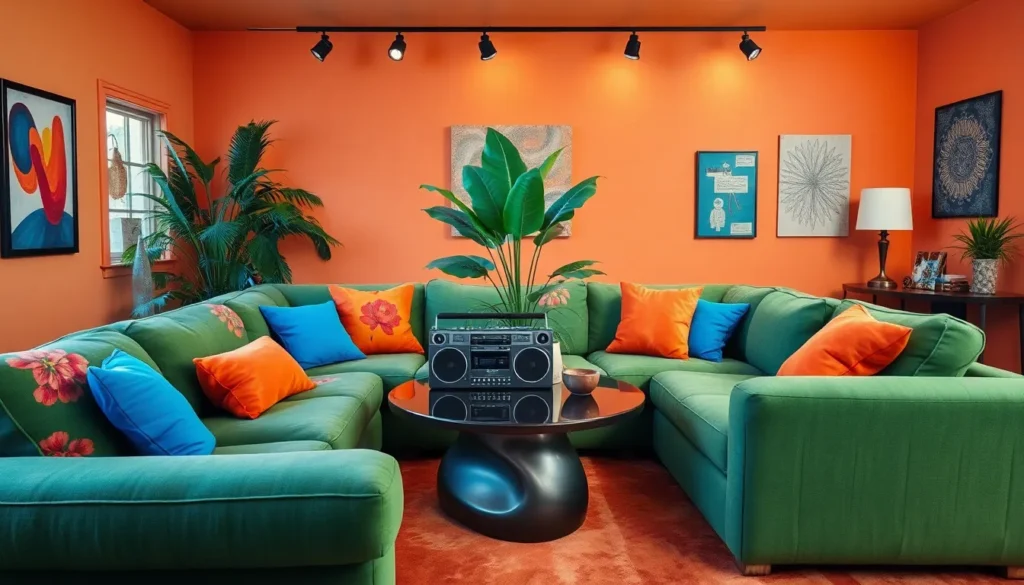
Step back in time to the 90s, an era defined by bold colors, eclectic patterns, and a certain charm that only a decade of oversized furniture and VHS tapes can deliver. Picture this: a living room where neon accents meet floral prints, and every couch comes with enough cushions to start a pillow fight. It’s a nostalgic paradise where the only thing more vibrant than the décor is the music blasting from a boombox.
Overview of Living Room 90s Interior Design
Living room design in the 1990s showcased a vibrant and eclectic style that reflected the culture of the time. Bold colors, such as deep greens, warm oranges, and electric blues, dominated walls and furnishings. Oversized furniture became a staple, offering comfort and a sense of casual sophistication.
Eclectic patterns also played a significant role in the decor. Floral prints adorned upholstery, curtains, and throw pillows, enhancing the cozy atmosphere. Geometric designs appeared in wallpaper and rugs, creating a dynamic contrast with softer elements.
Accessories added personal touches, often evoking fond memories. Wall art, framed posters, and collectibles often filled shelves and walls, showcasing individual tastes and interests. Popular motifs included neon signs and pop culture references that resonated with the era’s music and television.
Lighting design contributed to the ambiance as well. Track lighting, table lamps, and floor lamps with unique shapes illuminated spaces while reinforcing the eclectic vibe. Many homes featured televisions that served as a focal point, often accompanied by bulky furniture designed for media storage.
A sense of playfulness permeated living rooms during this decade. Texture played a crucial role, with plush fabrics like velvet, corduroy, and chenille enhancing tactile experiences. Everyone enjoyed layering different textures, creating inviting spaces where family and friends gathered.
Incorporating plants also became popular. Potted ferns, snake plants, and colorful flowers brightened rooms, bridging the gap between indoors and outdoors. Through these elements, 90s living room design illustrated a unique blend of comfort, expression, and nostalgia.
Key Characteristics of 90s Style
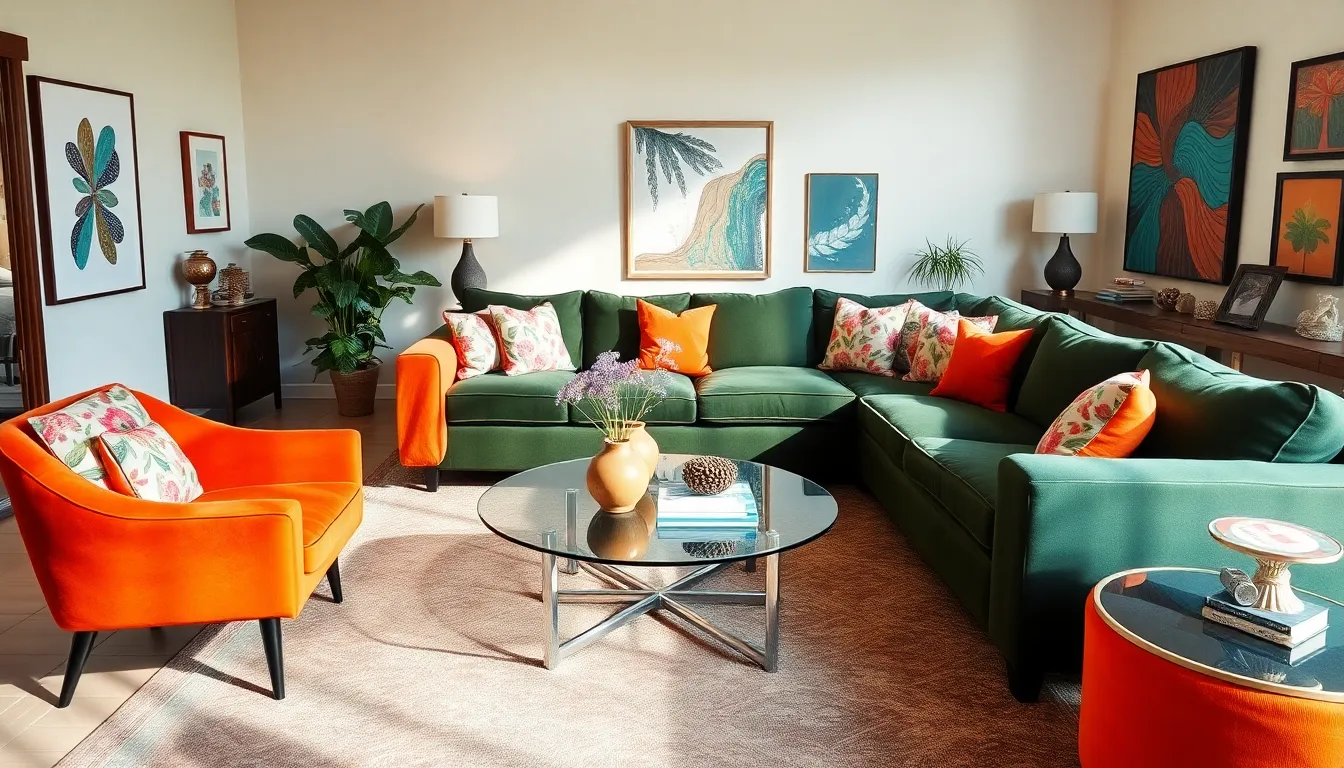
The living room design of the 1990s showcased distinct characteristics that defined the decade’s aesthetic.
Color Palettes and Patterns
Bright color palettes dominated 90s interiors, featuring vibrant shades like deep greens, warm oranges, and electric blues. These bold hues often adorned walls and furniture. Patterns, on the other hand, ranged from playful florals to striking geometric designs. Such eclectic mixes created a visually stimulating environment. Accent pieces frequently showcased kitschy motifs and vibrant textures, enhancing the overall aesthetic. Prints appeared on everything from upholstery to decorative pillows, contributing a sense of fun and personality to the space.
Furniture Trends
Oversized furniture defined the living rooms of the 90s, combining comfort with a casual sophistication. Sectional sofas became popular, offering ample seating for gatherings. Coffee tables often featured unique designs, ranging from glass tops to chunky wood frames. Armchairs in bold colors complemented the main seating, adding flair. Additionally, multi-functional pieces like ottomans provided extra seating and storage. Furniture styles embraced a mix of contemporary and traditional influences, creating cozy yet stylish spaces for relaxation and entertainment.
Iconic Elements in 90s Living Rooms
The living room of the 1990s featured several signature elements that defined its aesthetic.
Sofas and Chairs
Oversized sofas became essential, often designed as sectionals to encourage relaxation and socializing. Deep cushions offered ample comfort, while bold patterns captured attention. Colorful upholstery, from vibrant florals to geometric prints, enhanced visual appeal. Armchairs, especially those with retro styles, complemented the sofas, creating cohesive seating arrangements. Fabric options like velvets and chenilles added texture, contributing to the warm atmosphere. These seating choices not only embodied comfort but also embodied the playful spirit of the decade.
Decorative Accessories
Decorative accessories played a crucial role in defining the 90s living room style. Brightly colored throw pillows adorned sofas, offering additional comfort and flair. Wall art, featuring poster prints and abstract designs, personalized the space and reflected individual tastes. Collectibles and knick-knacks, often displayed on shelves, added character and nostalgia. Additionally, houseplants brought a touch of nature indoors, helping to soften the bold colors. Unique lighting fixtures, including track lighting and eclectic lamps, illuminated the room while serving as conversation starters. These accessories collectively enhanced the inviting atmosphere, making living rooms delightful spaces for gatherings.
Popular Influences and Styles
The 1990s interior design of living rooms showcased diverse influences that shaped the decade’s aesthetic.
Minimalism vs. Maximalism
Minimalism took on a subtle role during the 90s. Open spaces often featured simple decor and clean lines, but maximalism conversely thrived with bold colors and busy patterns. The contrast between these styles defined the living room vibe, as many residents embraced vibrant prints alongside bursts of texture. Soft furnishings, oversized sofas, and eclectic art displayed personality. Functionality also played a key role, blending different styles to create unique spaces. Bright accents complemented luxurious fabrics, engaging the senses in harmonious ways.
The Impact of Media and Pop Culture
Media and pop culture significantly influenced living room design. Iconic television shows like “Friends” popularized the use of large, comfortable sofas and coffee tables that doubled as gathering spots. Movies of the era showcased vivid color schemes and distinct styles, inspiring homeowners to emulate these looks in their spaces. Music videos and magazines further fueled trends, introducing an array of textures and accessories. Collectibles and memorabilia sourced from pop culture icons became central decorative elements. These factors collectively contributed to the lively and personalized aesthetic characteristic of 90s living rooms.
The charm of 90s interior design continues to resonate today. Its bold colors and playful patterns evoke a sense of nostalgia that many find appealing. This era’s emphasis on comfort and personality transformed living rooms into inviting spaces for connection and relaxation.
By embracing oversized furniture and eclectic accessories, homeowners can recreate that vibrant atmosphere. The unique blend of styles from the 90s offers endless inspiration for modern decor while celebrating the past. Whether it’s through a few nostalgic pieces or a complete overhaul, incorporating elements from this iconic decade can breathe new life into any living space.