Imagine walking into a living room that feels like a serene oasis instead of a cluttered battlefield. Minimalist interior design transforms ordinary spaces into extraordinary retreats, where less truly is more. This approach isn’t just about tossing out knick-knacks; it’s a lifestyle choice that promotes peace and simplicity, inviting calm into the chaos of everyday life.
Overview of Living Room Minimalist Interior Design
Living room minimalist interior design focuses on simplicity and functionality. This approach emphasizes open spaces, clean lines, and a limited color palette. Designers prioritize essential furniture pieces, ensuring each item serves a purpose. Natural light plays a crucial role, enhancing the airy feel of the room.
Selecting furnishings in neutral colors promotes tranquility. Shades of white, beige, and gray dominate, creating a serene atmosphere. Textures add depth, with materials like wood, metal, and fabric blending harmoniously. Accessories remain minimal, allowing a few well-chosen decor items to stand out.
Incorporating storage solutions becomes vital, as hidden storage maintains a clean look. Furniture like ottomans, coffee tables, or shelving units features multipurpose designs. This strategy reduces visual clutter while maximizing utility.
Greenery often finds its place in minimalist designs. Indoor plants contribute a touch of nature, improving air quality and adding vibrancy to the space. Positioning them strategically draws attention without overwhelming the environment.
Creating a cohesive look depends on balancing contrasts and harmony. Combining different textures, forms, and proportions enhances visual interest without complicating the design. Adopting this philosophy leads to a calming living room that nurtures relaxation and connection.
Ultimately, living room minimalist interior design invites inhabitants to focus on what truly matters. Spaces become personal sanctuaries, reflecting an organized lifestyle. Through thoughtful selection and arrangement, simplicity transforms everyday living.
Key Principles of Minimalist Design
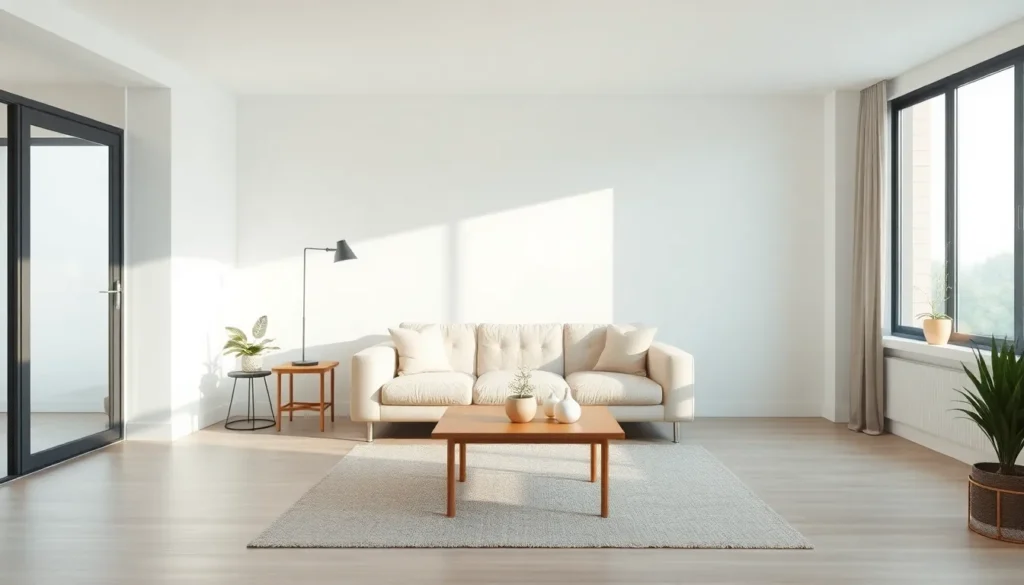
Minimalist design centers on clarity and purpose. It prioritizes essential elements within a space, promoting overall comfort and tranquility.
Functionality
Functionality defines minimalist design. Each piece of furniture enhances the room’s usefulness, ensuring that every item serves a clear purpose. Multipurpose furniture, like storage ottomans or expandable tables, maximizes usability while minimizing clutter. Rugs, lighting, and shelving should complement the layout, providing structure without overwhelming the senses. By focusing on practicality, individuals create environments that support their daily activities seamlessly and efficiently.
Aesthetic Simplicity
Aesthetic simplicity embodies minimalism’s visual appeal. Clean lines, neutral colors, and open spaces establish a serene atmosphere. Choosing a limited color palette, such as white, beige, and gray, fosters calm and unity throughout the room. Accessories should be minimal; one or two well-placed decor items draw attention and create visual interest. By incorporating textures from materials like wood or metal, layered simplicity adds depth without complexity. Emphasizing open areas encourages relaxation and promotes a spacious feel, highlighting the beauty of simplicity in design.
Essential Elements for a Minimalist Living Room
A minimalist living room thrives on simplicity and functionality. Each component plays a crucial role, creating an organized and serene environment.
Color Palette
Neutral colors dominate the minimalist design scheme. Shades of white, beige, and gray promote tranquility while allowing natural light to enhance the space. Accents in muted tones can introduce subtle warmth without overwhelming the senses. Colors work harmoniously, creating a cohesive look that maintains focus on essential elements. By avoiding bold hues, the atmosphere stays calm and inviting. It’s advisable to select a limited number of colors for a streamlined appearance. Consistency across walls, furnishings, and accessories reinforces the minimalist aesthetic.
Furniture Selection
Essential furniture forms the foundation of a minimalist living room. Multi-functional pieces like storage ottomans or coffee tables with built-in storage maximize space and reduce clutter. Choosing geometric shapes with clean lines adds visual appeal while maintaining simplicity. A few well-placed items ensure the room feels open and airy. The sofa should offer both comfort and function, serving as a focal point without overwhelming the space. Avoiding excess furniture allows for better movement and enhances the overall feel of the room. Prioritizing quality over quantity results in a more curated environment.
Decoration and Accessories
Minimal accessories highlight the beauty of simplicity. A few carefully chosen decor items can make a significant impact without adding clutter. Artwork with clean lines or neutral tones complements the overall design. When selecting plants, choose low-maintenance varieties that bring life and vibrancy. Incorporate textures through materials like wood or fabric to maintain visual interest. All items should serve a purpose, adding both aesthetic appeal and functionality. Eliminating unnecessary decor fosters a peaceful atmosphere. Thoughtfully curated accessories reflect personal style while adhering to minimalist principles.
Creating a Minimalist Atmosphere
Creating a minimalist atmosphere involves careful consideration of various design elements that foster simplicity and tranquility.
Lighting Techniques
Lighting significantly impacts the minimalist feel of a living room. Natural light plays a vital role, so large windows enhance brightness and openness. Incorporating sheer curtains allows soft sunlight to filter through, maintaining privacy while illuminating the space. On darker days, layered lighting solutions can serve as effective alternatives. Pendant lights or floor lamps with clean lines can add a touch of sophistication without overwhelming the room. Focus on energy-efficient bulbs that provide adequate warmth, contributing to a calming environment.
Space Management
Effective space management contributes to a well-organized minimalist living room. Choosing multifunctional furniture optimizes available space, allowing limited clutter and enhancing usability. For example, a coffee table with built-in storage offers practicality while preserving an airy feel. Arranging furniture to promote movement creates an inviting area, encouraging relaxation. Maintaining open pathways ensures seamless flow between functional zones. Utilizing vertical space with shelving keeps frequently used items accessible while minimizing visual noise, ensuring that the space feels cohesive and uncluttered.
Advantages of Minimalist Living Room Design
Minimalist living room design offers several benefits that enhance the environment and overall living experience. Below are a few key advantages of adopting this approach.
Enhancing Mood and Focus
Minimalist spaces foster tranquility, making them ideal for relaxation and concentration. Reducing visual distractions allows individuals to focus better on tasks or enjoy leisure activities. Neutral colors used in minimalist designs contribute to a serene atmosphere, enhancing mental clarity. Natural light also plays a vital role, lifting spirits and promoting positivity. Incorporating a few carefully selected decor items adds character without overwhelming the senses, creating a harmonious environment. This balance between simplicity and choice supports an organized mental state, making the living room a sanctuary from daily chaos.
Easier Maintenance
Maintaining a minimalist living room proves simpler than traditional designs. Fewer furniture pieces and accessories lead to a reduction in dust and dirt buildup, significantly lowering cleaning times. Utilizing multi-functional furniture not only maximizes space but also minimizes the number of items requiring attention. Open spaces make it easier to access different areas during cleaning sessions, promoting a streamlined process. A decluttered environment encourages periodic organization, further simplifying upkeep. Adopting minimalist principles encourages a commitment to cleanliness, paving the way for a consistently tidy living space.
Embracing minimalist interior design in the living room creates a sanctuary of peace and functionality. By prioritizing simplicity and intentionality, individuals can cultivate an environment that not only looks aesthetically pleasing but also enhances overall well-being. The focus on essential furniture and thoughtful decor allows for a harmonious balance, making the space feel open and inviting.
Incorporating natural light and neutral palettes contributes to a calming atmosphere, while multifunctional furniture optimizes space and reduces clutter. This design philosophy encourages a lifestyle centered around clarity and purpose, making it easier to maintain a tidy living area. Ultimately, minimalist living room design transforms everyday spaces into serene retreats that reflect a commitment to simplicity and tranquility.