

In a world where remote work and flexible hours reign supreme, the small office is no longer a forgotten corner of the corporate universe. Instead, it’s a canvas for creativity and innovation. Imagine a workspace that not only boosts productivity but also makes you feel like a design guru. Modern small office interior design is all about transforming tight spaces into vibrant environments that inspire and energize.
Gone are the days of drab cubicles and fluorescent lighting. Today’s small offices are stylish havens filled with smart storage solutions, multifunctional furniture, and pops of color that keep the boredom at bay. Whether it’s a cozy nook for brainstorming or a chic meeting space for client pitches, the right design can make all the difference. So let’s dive into the world of modern office aesthetics and discover how to turn that tiny space into a powerhouse of creativity.
Understanding Modern Small Office Interior Design
Modern small office interior design focuses on creating functional, inspiring, and aesthetically pleasing workspaces. Designers prioritize elements that make the most of limited space while enhancing productivity.
Key Principles of Modern Design
Minimalism, open layouts, and efficient use of natural light define modern design principles. Clean lines and uncluttered surfaces contribute to a calming atmosphere. Color palettes often consist of neutral tones with pops of vibrant colors. Thoughtful inclusion of plants or artwork can enhance creativity and bring warmth to the environment. Flexible furniture solutions allow for adaptability, accommodating various tasks and collaboration styles.
Importance of Functionality and Aesthetics
Functionality plays a crucial role in modern office design. Workstations must support both focused tasks and team collaborations. Smart storage solutions help keep spaces organized and neat. Aesthetics also contribute to employee morale; visually appealing environments improve mood and inspire innovation. Balancing these aspects ensures a workspace that promotes efficiency while encouraging creativity. Well-designed offices attract talent, making them essential for any organization.
Space Planning for Small Offices
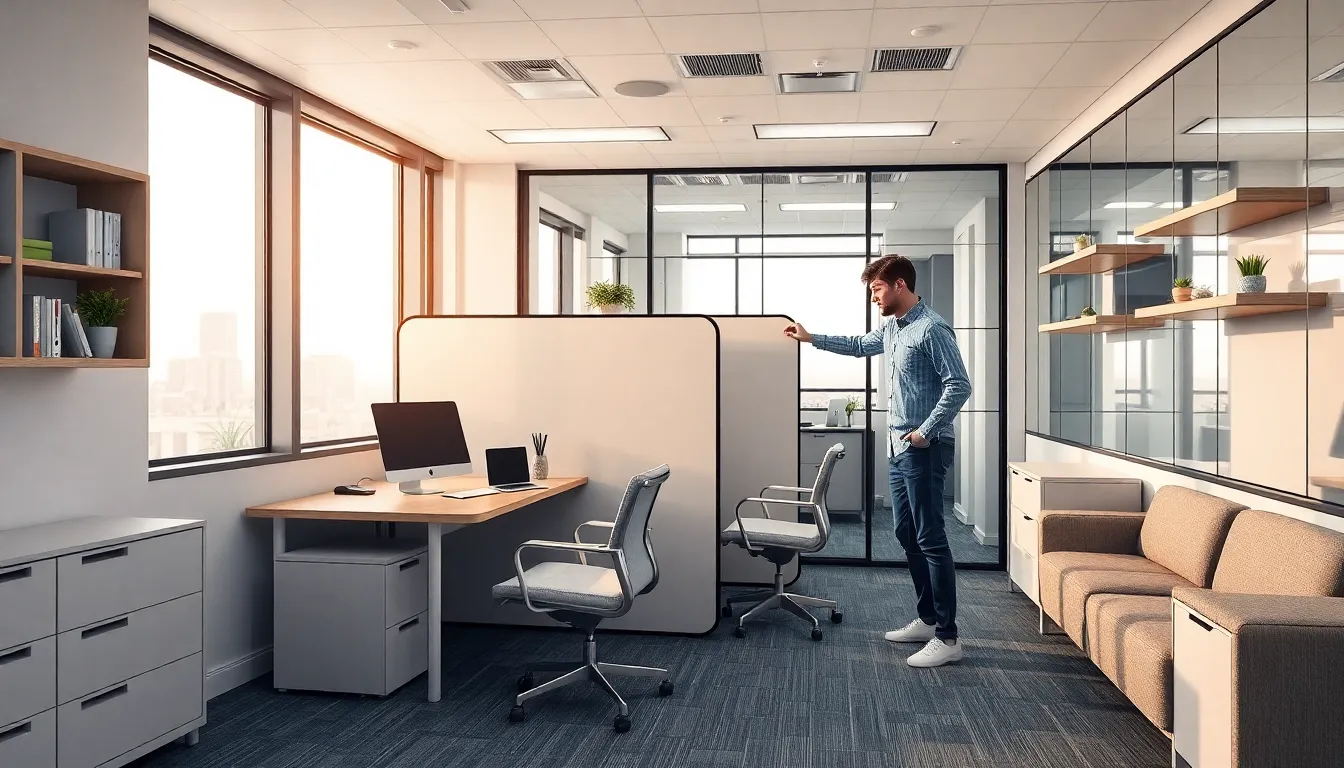
Effective space planning enhances productivity in small offices by using every square foot wisely. Consider furniture placement and movement flow to create a functional layout that encourages collaboration.
Maximizing Available Space
Utilizing vertical space proves essential in small office designs. Wall-mounted shelves maximize storage without consuming floor area. Multi-purpose furniture, such as desks with built-in storage, fosters organization while maintaining a sleek aesthetic. Incorporating mirrors can create an illusion of a larger space, making the environment feel more open and inviting. Deploying flexible seating options allows quick adjustments for different tasks, accommodating various team sizes and functions effortlessly.
Flexible Workspaces
Flexible workspaces support dynamic work environments. Moveable partitions enable team members to tailor their surroundings for focused work or collaborative sessions. This adaptability caters to changing project needs, fostering creativity and innovation. Implementing shared spaces for brainstorming and casual meetings encourages interaction among employees. Knowing the importance of technology integration, ensuring sufficient power outlets and high-speed internet access allows seamless connectivity in these versatile areas.
Color Schemes and Materials
Color schemes and material choices play a vital role in modern small office interior design. They create environments that not only look appealing but also enhance productivity.
Choosing the Right Colors
Selecting the right colors influences mood and focus. Neutral tones, like whites and grays, promote a calming atmosphere while allowing for bursts of vibrant accents. Earthy colors such as greens and browns can add warmth and connection to nature. Businesses often opt for blue hues to encourage concentration and innovation. Creating a harmonious color palette fosters a cohesive look throughout the space, capturing both creativity and professionalism.
Material Selection for Small Offices
Materials significantly affect the feel and functionality of a workspace. Sustainable options, including reclaimed wood and bamboo, appeal to eco-conscious companies. Durable surfaces like polished concrete or laminate ensure longevity while requiring minimal maintenance. Fabrics should balance style and comfort, with options like soft upholstery for seating and sound-absorbing panels enhancing acoustics. Brass and chrome accents add a modern touch, creating a sleek atmosphere that reflects contemporary design trends. Together, thoughtful material selection promotes an inviting and productive work environment.
Furniture Choices for Modern Offices
Furniture plays a crucial role in creating functional and stylish workspaces. Modern offices benefit from versatile pieces that adapt to various needs and styles.
Multi-Functional Furniture
Multi-functional furniture enhances space efficiency in small offices. Desks that convert into meeting tables provide flexibility amidst different tasks. Storage ottomans offer seating while doubling as storage solutions for office supplies. Modular shelving systems enable customization based on workspace requirements, allowing organizations to maximize vertical space. Folding chairs and tables can be easily stowed away when not in use, optimizing valuable square footage. These innovative options cater to employees’ diverse roles, ensuring comfort and practicality throughout the day.
Ergonomic Considerations
Ergonomics significantly influence employee well-being and productivity. Adjustable chairs allow individuals to customize the height and support, promoting better posture during long work hours. Sit-stand desks cater to various working styles, encouraging movement and reducing fatigue. Monitor arms help position screens at eye level, minimizing strain on the neck and eyes. Accessories like keyboard trays and footrests further enhance comfort, enhancing focus and efficiency. Prioritizing ergonomic choices fosters a healthier workplace, contributing to long-term employee satisfaction and success.
Lighting Solutions
Lighting significantly impacts the atmosphere and functionality of modern small office spaces. Effective lighting solutions enhance creativity, productivity, and overall employee well-being.
Natural Lighting Tips
Maximizing natural light creates an uplifting environment. Positioning desks near windows allows employees to benefit from sunlight. Additionally, using open window treatments encourages light penetration while maintaining outside views. Incorporating glass partitions can help distribute daylight throughout the office. Reflective surfaces, like mirrors, amplify natural light, making spaces appear larger and brighter. Including plants near windows not only beautifies the office but also improves air quality.
Artificial Lighting Options
Selecting the right artificial lighting complements natural sources and enhances functionality. Layering different types of lighting provides optimal brightness for various tasks. Task lighting, such as desk lamps, focuses light where it’s needed most. Ambient lighting, including ceiling fixtures, creates an overall glow for the workspace. Adjustable fixtures allow employees to modify light intensity according to tasks. Incorporating smart lighting systems can optimize energy use by adjusting brightness based on occupancy and time of day.
Incorporating Technology
Technology integration plays a crucial role in modern small office interior design. It enhances productivity while creating efficient, inspiring spaces.
Smart Office Solutions
Smart office solutions promote seamless workflows. Automation systems control lighting, temperature, and security, allowing employees to focus on their tasks without interruptions. Devices such as smart speakers and virtual assistants streamline communication between team members. High-speed internet access supports efficient virtual meetings and collaboration tools. Cloud storage systems enable instant file sharing and collaboration on projects, significantly improving team efficiency. Investing in these technologies fosters a productive environment that meets the needs of a modern workforce.
Integrating Tech Seamlessly
Integrating technology should happen without compromising aesthetics. Designers can hide cables and gadgets within furniture pieces, maintaining clean lines for a clutter-free appearance. Visible tech can distract and disrupt focus, so placement matters. Incorporating wireless charging stations in communal areas encourages collaboration without the mess of cords. Furthermore, strategically positioned screens allow for easy access to information while supporting visual engagement. Adopting ergonomic tech, such as height-adjustable desks, contributes to wellness and productivity. Overall, making technology an integral part of the design enhances both functionality and visual appeal.
Modern small office interior design transforms limited spaces into dynamic environments that foster creativity and productivity. By prioritizing functionality and aesthetics, organizations can create inviting workspaces that cater to diverse needs. Thoughtful furniture choices and effective space planning maximize every square foot while promoting collaboration and focus.
Incorporating natural light and smart technology further enhances these environments, ensuring they remain adaptable and efficient. As remote work continues to shape the future of professional spaces, embracing innovative design principles will be key to attracting talent and boosting employee morale. The right design can turn a small office into a powerhouse of inspiration and productivity.

