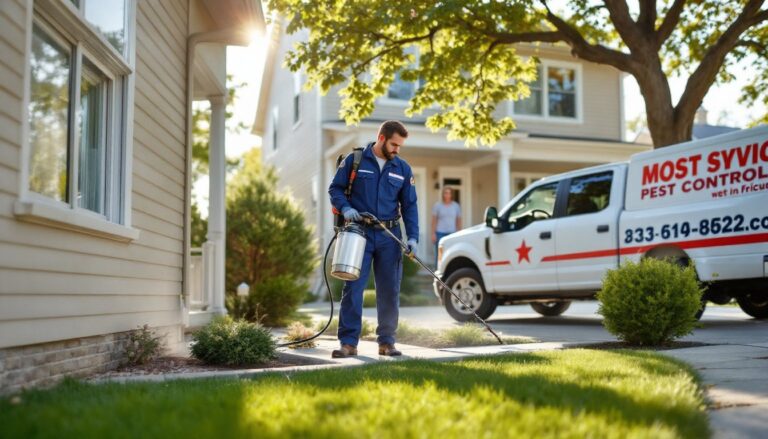
Nobody wants pests making themselves at home in the walls, crawlspace, or kitchen. But here’s the thing: most infestations start outside, long before you spot the first ant trail on the counter. Perimeter pest control is the frontline defense, a barrier treatment applied around the foundation that intercepts bugs before they cross your threshold. Whether you’re dealing with seasonal invasions or year-round pressure, understanding how perimeter treatments work, what professionals offer, and whether DIY is viable can save you time, money, and a lot of frustration. This guide walks through everything homeowners need to know about finding, hiring, and evaluating perimeter pest control in 2026.
Table of Contents
ToggleKey Takeaways
- Perimeter pest control creates a chemical barrier around your home’s foundation that intercepts crawling insects like ants and spiders before they enter, with residual protection lasting 60 to 90 days.
- Finding reliable perimeter pest control near you requires verifying state licenses, checking insurance and bonding, reading reviews for patterns, and comparing at least three quotes that detail treatment frequency and guarantees.
- Professional perimeter treatments cost $150–$300 initially and $400–$800 annually for quarterly service plans, with expenses varying by region, property size, and local pest pressure.
- DIY perimeter pest control can save 50% or more on costs using products like Talstar P or Demand CS, but requires careful label reading, proper equipment, and consistency to be effective.
- Seasonal pest surges—millipedes in spring, ants in summer, cluster flies in fall—make quarterly perimeter treatments essential to prevent infestations before they reach your living spaces.
- Combining perimeter pest control with exclusion repairs, landscape maintenance, and moisture management creates a layered defense that’s far more effective than spray-alone approaches.
What Is Perimeter Pest Control and How Does It Work?
Perimeter pest control is a preventive treatment applied around the exterior of a home’s foundation, typically extending 3 to 10 feet out from the base and 2 to 3 feet up the siding or masonry. The idea is simple: create a chemical or physical barrier that kills or repels insects before they find entry points like weep holes, foundation cracks, utility penetrations, or door thresholds.
Most professional treatments use liquid insecticides with active ingredients like bifenthrin, lambda-cyhalothrin, or fipronil. These are applied via tank sprayer, focusing on the foundation-soil junction, along expansion joints, around window wells, and near HVAC or plumbing penetrations. The residual effect typically lasts 60 to 90 days, though rain, irrigation, and UV exposure can shorten efficacy.
Some companies also apply granular insecticides in mulch beds or along fence lines, which activate with moisture and provide longer-lasting coverage. Newer products incorporate insect growth regulators (IGRs), which disrupt reproduction cycles rather than killing adults outright, useful for long-term suppression.
Perimeter treatments target crawling insects: ants, spiders, earwigs, cockroaches, millipedes, and centipedes. They’re less effective against flying pests (wasps, mosquitoes) unless paired with targeted nest treatments or fogging. And they won’t stop rodents, mice and rats need exclusion work, traps, and bait stations, not a spray line.
Why Perimeter Pest Control Is Essential for Homeowners
Treating after bugs get inside means you’re already playing catch-up. Perimeter control shifts the strategy to prevention, which is cheaper and less disruptive than interior fumigation or repeated service calls.
First, it reduces the chemical load indoors. Many homeowners prefer not to spray baseboards, cabinets, or closets if they can avoid it, especially with kids, pets, or respiratory sensitivities in the house. A strong exterior barrier keeps pests out without saturating living spaces.
Second, it protects structural integrity. Carpenter ants, termites (though termites require specialized treatment), and wood-boring beetles often start in exterior trim, soffits, or sill plates. Catching them at the perimeter prevents costly wood damage. Similarly, keeping moisture-loving pests like silverfish and springtails outside reduces the risk of mold or moisture issues that attract them in the first place.
Third, it’s a hedge against seasonal surges. Spring rains bring millipedes and earwigs. Summer heat pushes ants and spiders indoors seeking water. Fall cooling drives boxelder bugs, cluster flies, and stink bugs into wall voids. A quarterly perimeter schedule addresses these waves before they become infestations.
Finally, it supports integrated general pest management strategies that combine chemical, cultural, and mechanical controls. Trim shrubs back from siding, fix downspouts, caulk gaps, and back it up with a perimeter treatment. That layered approach is what separates a pest-free home from one that’s constantly battling bugs.
How to Find Reliable Perimeter Pest Control Services Near You
Start local. National franchises have name recognition, but regional operators often know the specific pest pressures in your area, whether that’s fire ants in the South, pavement ants in the Midwest, or Argentine ants on the West Coast. Ask neighbors, check local Facebook groups, or browse platforms like HomeAdvisor for contractor matching and reviews.
Look for state pest control licenses. Every state regulates pesticide applicators: verify the company and individual technicians hold current credentials. Most state agriculture or environmental departments maintain online license lookup tools.
Check insurance and bonding. A legitimate company carries general liability and workers’ compensation insurance. If a tech gets hurt on your property or accidentally damages siding, you shouldn’t be liable.
Read reviews, but read them critically. A single bad review among dozens of good ones might be an outlier. Look for patterns: late arrivals, high-pressure upsells, ineffective treatments, or poor communication. Companies with responsive customer service and transparent pricing tend to score higher.
Ask about the products they use. Reputable companies will name the active ingredients, explain the application method, and provide a Safety Data Sheet (SDS) on request. If they’re vague or evasive, that’s a red flag.
Get at least three quotes. Prices vary, but the cheapest bid isn’t always the best. Compare what’s included: number of visits per year, re-treatment guarantees, interior service if pests break through, and whether they address conducive conditions (like mulch piled against siding or leaking gutters).
Finally, confirm they’re willing to customize. A good company won’t cookie-cutter every home. They’ll inspect, identify hot spots, and tailor the treatment plan, not just spray and dash.
What to Expect During a Professional Perimeter Treatment
A professional service typically begins with an inspection. The technician walks the property, noting pest activity, entry points, moisture issues, and conducive conditions. Expect them to check under decks, around HVAC units, inside meter boxes, and along the foundation.
Before treatment, you’ll need to prepare. Move toys, grills, and planters away from the foundation. Close windows. If you have pets, plan to keep them inside or in a separate area during application and for the re-entry period, usually 30 minutes to 2 hours, depending on the product.
The tech will mix the insecticide in a tank sprayer (often a 2- to 4-gallon backpack or a truck-mounted rig for larger properties). They’ll apply a coarse spray along the foundation, soaking the soil-structure junction and treating up to the first floor windowsills. They’ll also hit cracks, weep holes, and penetrations. Some companies use a foam applicator for voids or a power duster for granular products in crawlspaces.
Application takes 30 to 60 minutes for an average single-family home. The tech should leave a service tag on the door noting the date, products used, and any follow-up recommendations.
After treatment, the product needs time to dry, typically 30 minutes in dry conditions, longer in humidity. Avoid irrigation or washing the treated areas for 24 to 48 hours to maximize residual effectiveness.
Most companies offer quarterly treatments (every 90 days), though some push monthly or bi-monthly plans. Quarterly is standard for perimeter work in temperate climates: monthly may be warranted in high-pressure areas or for termite monitoring.
If pests reappear between scheduled visits, call for a warranty re-treatment. Legitimate companies honor this, usually at no extra charge, if you’ve followed prep instructions and maintained the property.
DIY Perimeter Pest Control: Can You Do It Yourself?
Yes, but it requires the right products, equipment, and commitment. DIY perimeter control can be effective, and significantly cheaper, if you’re willing to do the research and follow label directions to the letter.
Start with a perimeter insecticide concentrate. Products like Talstar P (bifenthrin), Demand CS (lambda-cyhalothrin), or Suspend SC (deltamethrin) are widely available online and offer the same active ingredients pros use. Expect to pay $40 to $80 for a bottle that makes multiple gallons of finished spray.
You’ll need a pump sprayer, at least 1 gallon, ideally 2 to 4 gallons for efficiency. A fan-tip nozzle works best for broad coverage. Budget $25 to $60 for a decent sprayer: cheap ones clog or leak.
Read the label. This isn’t optional. The label is a legal document that specifies dilution rates, application sites, re-entry intervals, and environmental precautions. Mixing too strong wastes product and can harm plants: too weak won’t control pests. Most perimeter products dilute at 0.5 to 1 ounce per gallon of water.
Wear PPE: nitrile gloves, safety glasses, long sleeves, and pants. If you’re sensitive to chemicals, add a respirator with organic vapor cartridges.
Apply on a calm day (wind under 5 mph) with no rain forecast for 24 hours. Spray the foundation from grade level up to windowsills, overlapping slightly. Treat door thresholds, window wells, and any cracks. For crawlspaces, a hand duster with Delta Dust (deltamethrin) works well in dry voids.
Granular products like Bifen LP or Talstar PL can be broadcast with a hand spreader in mulch beds and around the perimeter. Water lightly after application to activate.
The downside? DIY lacks the expertise of a trained tech. If you misidentify the pest or miss key harborage areas, you won’t see results. And if you’re dealing with termites, carpenter ants in walls, or a severe infestation, call a pro. Some problems are beyond DIY scope.
DIY also won’t include the warranty or callback service that comes with professional plans. If the treatment fails, you’re buying more product and re-spraying on your own dime.
Cost of Perimeter Pest Control Services in 2026
Pricing varies by region, property size, pest pressure, and service frequency. Here’s what homeowners can expect in 2026.
Initial treatment: Typically $150 to $300 for a standard single-family home (1,500 to 2,500 square feet). This includes inspection, exterior application, and often an interior spot treatment if pests are already present.
Quarterly plans: Most companies bundle four treatments per year for $400 to $800 total, or roughly $100 to $200 per visit. Larger homes (3,000+ square feet) or properties with extensive landscaping may run $150 to $250 per visit.
Monthly plans: Some services push monthly visits at $50 to $100 per month ($600 to $1,200 annually). This is overkill for perimeter control alone unless you’re in a high-pressure zone (e.g., heavy mosquito or fire ant areas) or bundling interior, termite, and rodent services.
Add-ons: Expect extra charges for termite inspections ($75 to $150), crawlspace treatments ($100 to $300), attic rodent exclusion ($200 to $500), or mosquito fogging ($75 to $150 per treatment). Bundling services often gets you a discount.
Regional differences: Costs are higher in metro areas (expect +20% to 40% in cities like San Francisco, New York, or Seattle) and lower in rural markets. Pest pressure also matters, homes near wooded areas or wetlands may require more aggressive (and pricier) plans.
DIY cost comparison: A year’s worth of DIY perimeter treatments runs $100 to $200 in materials (concentrate, sprayer, granules), plus your time. If you’re handy and consistent, DIY can cut costs by 50% or more. But factor in the learning curve and the risk of ineffective application.
Some companies offer first-time customer discounts (10% to 25% off initial service) or loyalty plans that reduce per-visit costs after the first year. Ask about these when shopping quotes.
Understanding service pricing structures and comparing quotes for professional treatments helps homeowners budget effectively and avoid overpaying for unnecessary services.
Conclusion
Perimeter pest control is a proactive investment that keeps bugs outside where they belong. Whether hiring a professional or tackling it DIY, the key is consistency, proper product selection, and addressing the conditions that attract pests in the first place. Get quotes, ask questions, and don’t skip the prep work, your home’s first line of defense depends on it.