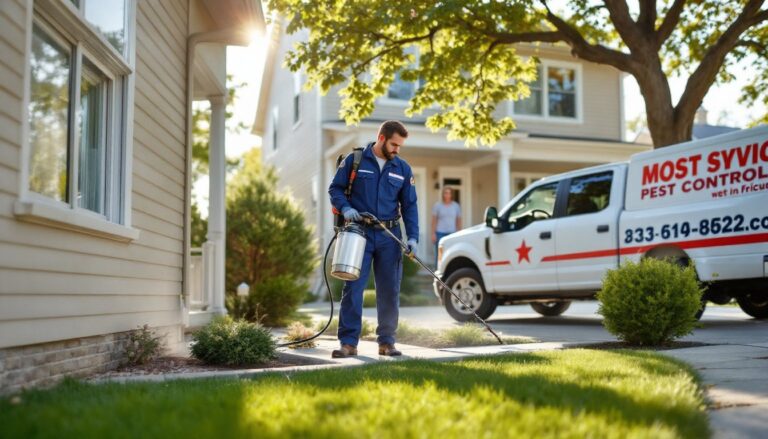
When pests invade, homeowners need more than a can of bug spray. They need professional firepower. The pest control industry has evolved into a multi-billion-dollar sector dominated by national and international players with the resources, training, and technology to tackle everything from termites to bedbugs. But bigger doesn’t always mean better for every situation. Understanding what separates industry giants from smaller operations, and what each major company brings to the table, helps homeowners make informed choices when it’s time to reclaim their space from unwanted guests.
Table of Contents
ToggleKey Takeaways
- The biggest pest control companies differentiate through nationwide service networks, proprietary treatment protocols, and advanced technology like IoT monitoring systems that smaller operators cannot match.
- Orkin, Terminix, and Rentokil dominate the industry with different strengths: Orkin excels in training infrastructure and commercial expertise, Terminix offers transferable termite bonds valuable for resale, and Rentokil provides data-driven IoT monitoring for precise pest tracking.
- Aptive Environmental represents a modern alternative, emphasizing eco-friendly treatments and seasonal approaches while operating on performance incentives, though homeowners should carefully review contract terms due to past legal challenges.
- When choosing a pest control company, verify licensing through state regulatory agencies, compare guarantees and coverage terms carefully, and request Safety Data Sheets for products if you have pets or chemical sensitivities.
- Pricing for major pest control providers ranges from $150–$500 for initial service and $90–$350 for quarterly maintenance, but the cheapest bid may not offer the best value for serious infestations like termites that require specialized expertise.
What Makes a Pest Control Company Stand Out in the Industry?
Scale matters in pest control, but not in the way most people think. The largest companies differentiate themselves through nationwide service networks, proprietary treatment protocols, and multi-year research budgets that smaller operators can’t match. They maintain regional offices, stock specialized equipment, and employ entomologists who develop targeted solutions for specific pest biology.
Response time and consistency set leaders apart. A company operating in 47 states can transfer treatment records when a customer moves, guarantee service during peak season, and deploy certified technicians within 24-48 hours. They also carry higher liability coverage and bond amounts, which matters when treatments involve drilling through slabs or treating structural components.
Customer volume drives innovation. Major players invest in Integrated Pest Management (IPM) techniques, eco-friendly formulations, and digital monitoring systems because they have the financial cushion to test and refine methods across thousands of properties. Companies like these often maintain relationships with manufacturers who provide professional-grade products that aren’t available at retail.
That said, size introduces bureaucracy. Larger companies use scripted service models and tiered pricing structures that may not flex for unusual situations. Homeowners dealing with a straightforward ant problem may not need the infrastructure a national chain provides, while someone facing a severe termite infestation in a historic home probably does.
Orkin: The Global Leader in Pest Management
Founded in 1901, Orkin operates in over 400 locations across the U.S. and serves more than 1.7 million customers annually. It’s the pest control equivalent of a utility company, ubiquitous, predictable, and backed by a century of field data. Orkin’s strength lies in its training infrastructure: every technician completes a multi-week certification program at the company’s training facilities before running solo service routes.
Orkin’s residential offerings cover the standard roster, termites, rodents, bed bugs, mosquitoes, but the company also specializes in commercial contracts for food processing plants, hospitals, and multi-unit housing. That cross-pollination of commercial and residential expertise means techniques developed for high-stakes industrial clients trickle down to homeowner service plans.
The pricing structure leans toward annual contracts with quarterly treatments. Homeowners can expect initial service fees between $150-$400 depending on property size and pest type, with ongoing quarterly visits ranging from $100-$300. That’s not bargain-bin pricing, but it includes a satisfaction guarantee and re-treatment at no additional cost if pests return between scheduled visits.
Many homeowners researching pricing details often compare Orkin’s service costs against regional competitors to gauge value. One downside: Orkin’s call center model can feel impersonal. Customers often speak to a dispatcher rather than the technician who’ll perform the work, which complicates communication about specific concerns or site access issues.
Terminix: Comprehensive Solutions for Every Pest Problem
Terminix serves roughly 2.8 million customers across residential and commercial markets, making it one of the most recognizable names in pest management. The company’s strength is versatility, it handles everything from general pest control to fumigation, wildlife removal, and moisture control services that address the conditions pests need to thrive.
Terminix pioneered the termite bond, a transferable warranty that stays with the property rather than the customer. For homeowners planning to sell within a few years, this matters. A termite bond showing active coverage and regular inspections adds measurable value during real estate transactions and often satisfies lender requirements in termite-prone regions.
The company offers both traditional chemical treatments and reduced-risk formulations under its GreenHome service line. The latter uses EPA-approved botanical and biological products for customers with pets, kids, or chemical sensitivities. It’s a middle ground between conventional pest control and purely mechanical exclusion methods, though effectiveness varies by pest type.
Terminix’s pricing mirrors Orkin’s general range, with initial treatments running $150-$500 and quarterly maintenance between $100-$350. The company frequently runs promotional pricing for first-time customers, but read the contract terms carefully, some discounts apply only to the initial visit, with standard rates kicking in afterward. Terminix also operates a franchise model in some markets, which means service quality and communication styles can vary by location more than with fully corporate-owned operations.
Rentokil: International Expertise and Innovation
Rentokil operates in over 90 countries and serves more than 5 million customers globally, making it the largest pest control organization by international footprint. The company entered the U.S. market aggressively through acquisitions, purchasing regional pest control firms and integrating them under the Rentokil brand while often retaining local branding and management.
What sets Rentokil apart is its data-driven approach. The company uses IoT-connected monitoring devices that track pest activity in real time, allowing technicians to identify infestation patterns and adjust treatment schedules based on actual activity rather than calendar intervals. These systems work particularly well for rodent control, where wireless traps send alerts the moment a device is triggered.
Rentokil’s PestConnect system uses motion sensors and environmental monitors placed in attics, crawl spaces, and wall voids to detect pest movement 24/7. For homeowners dealing with recurring problems or hard-to-diagnose issues, this level of monitoring beats traditional monthly inspections. But, the technology comes at a premium, expect to pay 20-30% more than conventional service plans.
The company’s U.S. pricing varies widely depending on whether you’re served by a legacy regional brand or a fully integrated Rentokil office. General pest control contracts typically run $120-$400 for initial service, with quarterly follow-ups between $90-$300. Rentokil also emphasizes non-toxic methods where feasible, including heat treatments for bed bugs and exclusion techniques for rodents, making it a strong choice for homeowners prioritizing minimal chemical use.
Aptive Environmental: Modern, Eco-Friendly Pest Control
Founded in 2015, Aptive Environmental is the youngest major player on this list but has grown rapidly through a customer-centric service model and aggressive expansion. The company operates in over 30 states and emphasizes eco-friendly formulations as a core brand promise rather than an optional service tier.
Aptive uses a four-season treatment approach, adjusting products and application methods based on pest life cycles throughout the year. Spring treatments target emerging ants and spiders, summer focuses on mosquitoes and wasps, fall addresses rodents seeking indoor shelter, and winter treatments prevent overwintering pests. This seasonal rotation reduces chemical load while maintaining effectiveness.
The company’s pricing structure is straightforward: Aptive quotes annual contracts rather than per-treatment fees, with costs ranging from $600-$1,200 per year depending on property size and service frequency. That includes initial treatment plus scheduled follow-ups every 60-90 days. There’s no charge for emergency service calls between scheduled visits if pests return.
Aptive’s technicians work on performance incentives, which has pros and cons. On one hand, techs are motivated to solve problems quickly to maintain customer retention. On the other, some customers report aggressive upselling of additional services like rodent exclusion or termite inspections. The company has faced legal challenges in some states over contract terms and cancellation policies, so read agreements carefully before signing. For homeowners prioritizing pet-safe treatments, Aptive’s default product line is among the most pet-friendly in the industry.
How to Choose the Right Pest Control Company for Your Home
Start with licensing and insurance verification. Every state requires pest control operators to carry specific certifications, and companies should provide their license numbers without hesitation. Check your state’s pesticide regulatory agency website to confirm active status and review any disciplinary actions. Liability insurance and workers’ comp coverage protect homeowners if a technician is injured on-site or treatment causes property damage.
Evaluate the scope of guarantees. Reputable companies stand behind their work with re-treatment guarantees if pests return between scheduled services. Read the fine print, some guarantees exclude certain pests or require you to maintain a continuous service contract. Termite work should include multi-year damage warranties that specify repair costs if structural damage occurs even though treatment.
Consider whether you need general preventive services or specialized treatment for a specific infestation. If you’re dealing with a known problem like bed bugs or termites, prioritize companies with demonstrated expertise in that area. Ask how many treatments they perform annually for your specific pest and what their success rate looks like.
Get multiple quotes, but compare apples to apples. A $99 initial service from one company may cover only perimeter spraying, while a $250 quote from another includes interior treatment, attic inspection, and three-month coverage. Platforms like HomeAdvisor can help homeowners compare local providers and read verified customer reviews.
Ask about treatment methods and products. If you have kids, pets, or chemical sensitivities, request Safety Data Sheets (SDS) for the products they’ll use. EPA registration numbers should be visible on all product containers, and technicians should be able to explain application rates and re-entry times. Companies investing in expert pest services training typically offer more flexibility in treatment approaches.
Finally, trust your gut on communication. If a company refuses to answer questions, pushes for an immediate signature, or can’t provide references, walk away. Pest control is a long-term relationship, and you’ll interact with these folks multiple times a year. The cheapest bid isn’t always the best value, especially when dealing with termite damage and treatment costs that can run into thousands if done incorrectly. Professional pest management protects both home value and family health, making it worth the effort to choose a provider that matches your needs and communicates clearly. Resources like Angi provide detailed contractor reviews and cost comparisons for homeowners evaluating their options.
Conclusion
The biggest pest control companies bring undeniable advantages: proven track records, extensive training programs, and resources that smaller operators simply can’t match. But the right choice depends on the specific problem, property type, and homeowner priorities. Whether it’s Orkin’s institutional reliability, Terminix’s comprehensive warranties, or Aptive’s eco-friendly approach, matching company strengths to household needs delivers better outcomes than picking a name out of a phone book.